Play store

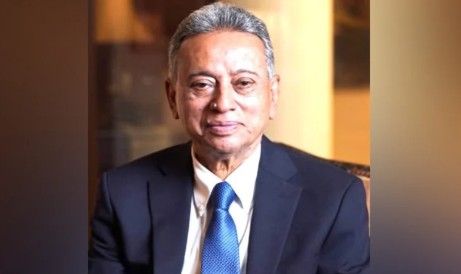
Dhaka: A Bangladesh delegation led by Finance Minister Amir Khosru Mahmud Chowdhury is visiting South Korea to strengthen bilateral relations and expand economic cooperation between the two countries.
The visit will focus on economic development, trade expansion and investment opportunities, particularly in information and communication technology (ICT), artificial intelligence (AI), electronics, semiconductors, modern manufacturing, shipbuilding and light engineering.
The delegation is also scheduled to hold discussions on issues of mutual interest to further deepen cooperation between Bangladesh and South Korea.
Other members of the delegation include Prime Minister’s Adviser on Posts, Telecommunications and Information Technology Rehan Asif Asad, Prime Minister’s Special Assistant on Investment and Capital Market Tanvir Shahriar Ghani, and Economic Relations Division (ERD) Secretary Md Shahriar Kader Siddiky.
During the visit, the delegation will attend a series of bilateral meetings with senior ministers and officials of the South Korean government to explore new opportunities for trade, investment and technological collaboration.
ERD officials said the delegation is likely to hold meetings with major South Korean companies, including Samsung, Hanwha Ocean, Naver, Youngone, FuriosaAI and LG AI Research. Separate meetings are also planned with SK Gas and Naver, alongside discussions with the Korea International Cooperation Agency and Korea Eximbank.
The Integrated Growth Network Development (IGND) initiative is expected to feature prominently in discussions on investment opportunities and technological cooperation.
Supported by the Asian Development Bank, the ERD-developed initiative seeks to connect production centres, industrial clusters, cities and trade gateways through coordinated investment in transport, energy, urban services, skills and digital infrastructure.
The government’s Five-Year Strategic Framework for Reform and Development envisages linking the northwest, Dhaka and the southeast, while developing additional growth clusters to spread economic opportunities beyond the capital.
The framework estimates an indicative investment requirement of US$80 billion across phases extending to fiscal year 2045-46. The financing is expected to come from public resources, private investment, public-private partnerships and development partners.
Bangladesh also has a pipeline of infrastructure projects identified under the bilateral public-private partnership (PPP) platform, providing further opportunities to attract South Korean private investment.
The FY2026-27 Annual Development Programme separately lists 17 unapproved public-sector projects without allocation that envisage Korean financing, including some with co-financing from the ADB.
The projects cover transport, sanitation, research, healthcare and skills development.
The proposed assistance would support project planning, institutional arrangements and financing preparation, with the ERD serving as the executing agency.