


 Play store

Only 14 of the 22 Arab countries are members of the World Trade Organization (WTO), leaving the rest at risk of missing opportunities for deeper integration into the global economy, according to a new joint study.
The report, prepared by the WTO, the Arab Monetary Fund, the Islamic Development Bank and the Islamic Centre for Development of Trade, examines the benefits of WTO membership, the barriers to accession and the economic characteristics shaping the Arab region.
It says WTO membership has helped member countries secure greater access to international markets, strengthen competition, improve the business environment and attract foreign direct investment. Membership also promotes economic diversification, regulatory reform and greater policy predictability.
The study highlights a clear gap in logistics performance between Arab WTO members and non-members.
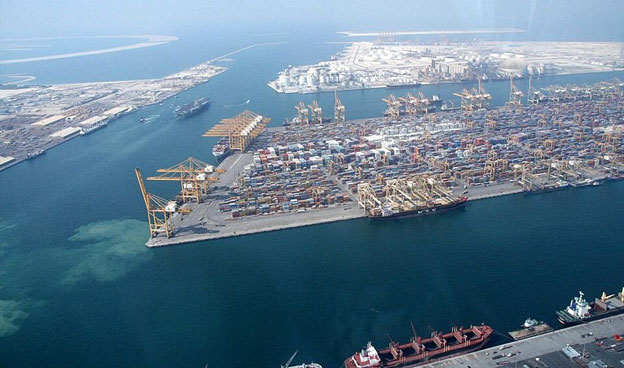
According to the World Bank’s 2023 Logistics Performance Index, Arab WTO members achieved an average score of 3.17, compared with 2.25 for non-member states. The United Arab Emirates ranked highest among Arab economies with a score of 4.0, while Somalia and Libya recorded 2.0 and 1.9 respectively.
Despite these potential benefits, accession has remained a lengthy and difficult process for many Arab countries. Seven states seeking WTO membership, Algeria, Iraq, Lebanon, Libya, Somalia, Sudan and Syria, have spent an average of more than 18 years in the accession process, with negotiations in several cases remaining inactive for extended periods.
The report attributes these delays to political instability, armed conflict, weak institutions and economic challenges. In many countries, conflicts have disrupted investment and infrastructure, while outdated regulatory systems have made it difficult to meet WTO requirements.
Joining the WTO also requires extensive legal and institutional reforms, close coordination among government agencies and sustained political commitment throughout often lengthy negotiations.
The study notes that the legacy of centrally planned economies has created additional obstacles for some Arab countries.
“An inevitable consequence of this history was the limited experience gained in regulating and governing a competitive private sector-led economy,” the report says.
“A transformation from a centrally planned economy to a market economy model normally requires a fundamental shift in the government’s role from being a producer to becoming a regulator.”
Heavy dependence on oil and gas exports remains another major challenge for several Arab economies seeking WTO membership.
In 2020, fuel accounted for 97 percent of Iraq’s exports and 95 percent of exports from both Algeria and Libya. The report warns that such dependence leaves these economies highly vulnerable to fluctuations in global commodity prices and underscores the need for greater diversification.
Trade balances also vary widely across the region.
In 2022, Saudi Arabia recorded a merchandise trade surplus of US$221.3 billion, followed by the United Arab Emirates with US$112.3 billion and Qatar with US$97.5 billion. By contrast, Egypt posted a trade deficit of US$37 billion, while Morocco and Lebanon recorded deficits of US$30.3 billion and US$15.1 billion respectively.
The report says these differences reflect the diverse economic structures across the Arab world. Oil-rich economies, including Saudi Arabia, the UAE, Qatar, Oman, Kuwait, Iraq, Algeria and Libya, rely heavily on hydrocarbon exports, while countries such as Egypt, Jordan, Tunisia, Morocco and Lebanon depend more on imported goods and have relatively smaller energy sectors.
Given these differences, the study argues that a single approach to WTO accession would be ineffective. Instead, each country’s strategy should be tailored to its economic structure, institutional capacity and political circumstances.
Trade remains a key pillar of the Arab economy, accounting for 87 percent of the region’s combined GDP in 2023. However, trade among Arab countries remains limited, with intra-Arab exports representing just 9.9 percent of total exports and intra-Arab imports accounting for 12.1 percent of total imports.
International partners have already begun supporting accession efforts in some countries.
In Iraq, the European Union has funded the Strengthening the Agriculture and Agri-Food Value Chain and Improving Trade Policy (SAAVI) project, which provides technical assistance, capacity building and policy advice to help align Iraq’s trade regulations with WTO standards.
The report concludes that deeper participation in the multilateral trading system could help Arab economies diversify, strengthen their integration into global value chains and reduce dependence on hydrocarbons.
However, it stresses that WTO membership alone is not enough. For the seven Arab countries still seeking accession, stronger institutions, better policy coordination and sustained political commitment will be essential to completing accession processes that have already stretched well beyond 18 years. Source: IPS