Play store


NASA has launched a pioneering space mission to rescue its ageing Swift space telescope, marking the first attempt to capture and reposition an orbiting scientific observatory before it falls back to Earth.
The mission aims to save the NASA-funded Swift observatory, which has spent more than two decades studying some of the universe’s most powerful explosions but is now steadily losing altitude due to increased atmospheric drag caused by heightened solar activity.
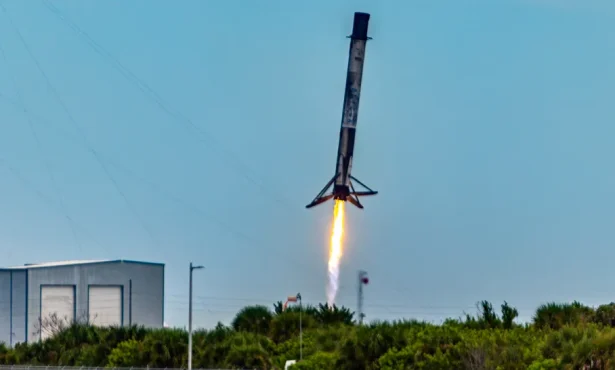
The rescue spacecraft, named LINK and developed by Arizona-based Katalyst Space Technologies, was successfully launched on Friday. Over the coming weeks, it will gradually approach the Swift observatory, dock with it using three robotic arms and gently raise it to a higher, safer orbit, allowing the telescope to continue its scientific mission.
Scientists say the operation is one of the most ambitious satellite-servicing missions ever attempted.
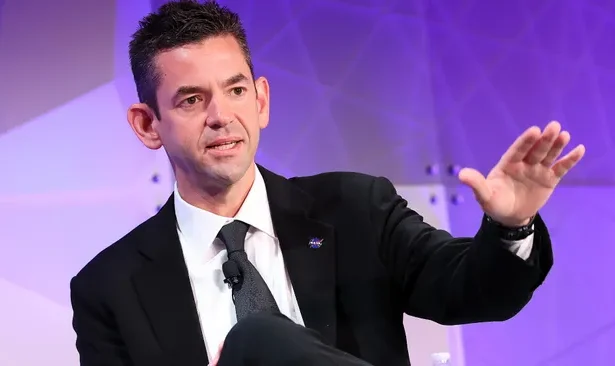
“This is a high-risk mission, but NASA clearly believes it is worth attempting,” said Dr Simeon Barber, Senior Research Fellow at the Open University.
“The science community is hopeful because Swift remains an extremely important telescope that allows us to observe high-energy events in the universe that few other instruments can study,” he said.
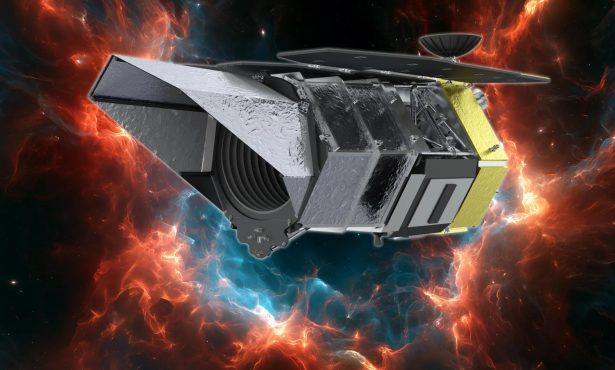
Launched in 2004, the Swift observatory was specifically designed to detect gamma-ray bursts, the most energetic explosions known in the universe. These events occur when massive stars collapse or when ultra-dense stellar remnants collide, releasing within seconds as much energy as the Sun is expected to emit over its entire 10-billion-year lifetime.
Swift carries three sophisticated telescopes capable of rapidly turning toward newly detected explosions, enabling astronomers to capture these fleeting cosmic events before they disappear.
The observatory originally orbited Earth at an altitude of about 600 kilometres (373 miles). However, increased solar activity has expanded Earth’s upper atmosphere, creating additional drag that has gradually slowed the spacecraft and lowered its orbit to around 360 kilometres (220 miles), with most of the descent occurring during the past two years.
NASA said that if Swift falls below about 300 kilometres (186 miles), a rescue mission would become virtually impossible.
Katalyst Space Technologies was given less than a year to design, build and test the LINK spacecraft.
“What the Katalyst team has accomplished in just eight months is extraordinary,” said the company’s Chief Executive, Ghonhee Lee.
“The team designed, built, tested and integrated a robotic spacecraft capable of performing one of the most ambitious commercial servicing missions ever attempted,” he said.
About the size of a refrigerator, LINK is equipped with three robotic arms, multiple cameras, navigation sensors and precision thrusters. After completing a series of system checks in orbit, it will slowly manoeuvre toward Swift over the next three to four weeks.
Once alongside the telescope, LINK will inspect it from all angles before attempting to grasp the spacecraft, which was never designed to be serviced in orbit. Engineers say this makes the docking operation particularly challenging.
If successful, LINK will gradually fire its thrusters over several months to raise Swift back toward its original orbit, extending the telescope’s operational life for years.
Scientists say the mission could pave the way for future in-orbit servicing of valuable satellites and space telescopes. If LINK succeeds, similar technology could one day be used to extend the life of other iconic observatories, including the Hubble Space Telescope.