Play store

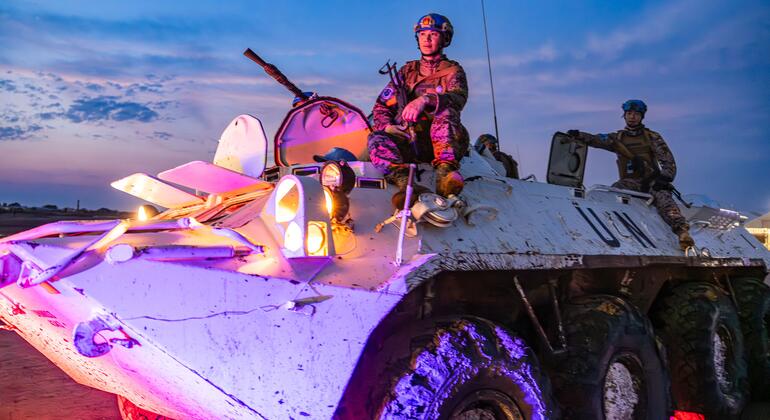
Supporting democratic elections after devastating civil wars in Mozambique and Cambodia, disarming thousands of child soldiers in Sierra Leone and helping Namibia achieve independence from South Africa are among the notable contributions of United Nations peace operations.
But the global environment in which these missions operate is changing rapidly. The world is facing its highest number of conflicts since 1945, while deaths from war are rising and peace operations are increasingly being deployed to contain violence rather than implement peace agreements.
Against this backdrop, UN Secretary-General António Guterres has called for a fundamental rethink of how peace operations work.
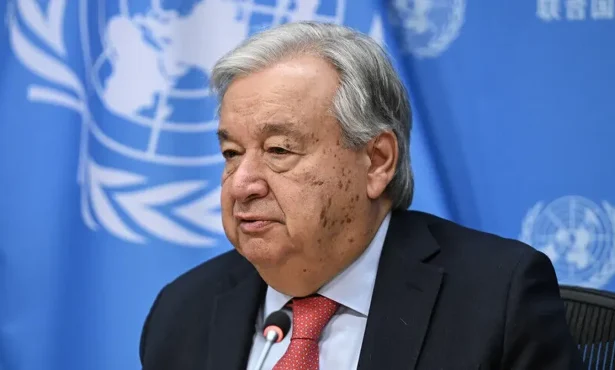
“UN peace operations are indispensable tools for maintaining international peace and security, but to be more effective, they must adapt to new realities,” Guterres told the UN General Assembly on Wednesday.
At UN Headquarters in New York, he presented the organisation’s first comprehensive review of the future of all forms of UN peace operations. The review was requested under the landmark Pact for the Future and sets out recommendations for adapting the UN’s peace and security tools to emerging challenges.
UN peace operations cover a broad range of missions, from small civilian political offices to large, multidimensional peacekeeping operations and Security Council-authorised peace enforcement operations.
They are designed to help prevent conflicts, protect civilians, support political processes, maintain ceasefires and create conditions for lasting peace.
“United Nations peace operations are a critical form of multilateral action,” Guterres said. “They help defuse crises, stop conflict, sustain ceasefires and protect civilians. In lands stained by bloodshed, they create space for dialogue and open pathways to peace.”
Since 1948, the Security Council has authorised UN peacekeepers to help conflict parties reach political settlements, prevent disputes from escalating into armed conflict and reduce violence while political solutions are pursued. There are currently 11 active UN peacekeeping missions.
UN peacekeepers are popularly known as “Blue Helmets” because of their distinctive headgear and uniforms. Their operations are based on three core principles: consent of the parties to the conflict, impartiality and the non-use of force except in self-defence or defence of their mandate.
Peacekeeping can be extremely dangerous. More than 4,500 UN peacekeepers have died while serving in missions around the world. Their contribution was recognised in 1988 when UN peacekeepers collectively received the Nobel Peace Prize for preventing armed clashes and helping create conditions for negotiations.
Special political missions are primarily civilian operations deployed under mandates from the Security Council. They work to prevent conflicts, mediate peace negotiations and support political transitions.
Unlike traditional peacekeeping missions, they do not depend on large military or armed contingents. Instead, they work closely with governments, parties to conflicts, regional organisations and civil society.
The UN has deployed 167 such missions since 1948. Around 40 were active in 2024, according to a review by the UN Department of Political and Peacebuilding Affairs.
These missions can play an important role even when there is no formal peacekeeping force on the ground. Their work may include supporting elections, facilitating dialogue, strengthening political institutions and promoting the participation of women and other groups in peace processes.
Peace enforcement operations are authorised by the Security Council under Chapter VII of the UN Charter. They can involve a range of measures, including the use of military force.
Unlike conventional peacekeeping, peace enforcement does not necessarily require the consent of the parties to a conflict. UN Blue Helmets themselves do not directly participate in such operations.
In several recent crises, including Haiti, Mali and Somalia, UN missions have operated alongside Security Council-authorised peace enforcement operations conducted by non-UN forces. These UN missions have generally focused on political processes, civilian support and longer-term peace consolidation.
African Union peace support operations authorised by the Security Council also fall within this broader category.
The operating environment for peace operations has deteriorated significantly, according to Guterres’ review.
Modern conflicts are becoming more complex, comprehensive peace agreements are less common and financial support for peace operations has declined. Recent funding cuts have reduced peacekeeping resources by nearly half a billion dollars and funding for special political missions by $96.3 million, the report says.
Guterres stressed that peace operations cannot substitute for the political will of governments and conflict parties to end violence.
“No peace operation and no political process supported by the United Nations can succeed without solid and cohesive support from Member States,” he said.
The UN chief said mandates should therefore be narrowly focused, achievable, adaptable and cost-efficient. Missions must also be accountable, particularly when allegations of sexual exploitation and abuse arise, and should work closely with Member States and other UN bodies.
The review calls for more than simply rewriting mission mandates. Future operations could have lighter and more mobile footprints, allowing them to respond more quickly to changing circumstances. The UN also wants stronger data collection and threat analysis, greater use of technology to counter drones and disinformation, and enhanced measures to protect peacekeepers.
The objective is to make missions more effective while operating under increasingly difficult security and financial conditions.
Guterres pointed to UN-supported peace efforts in Colombia and work related to the border dispute between Cameroon and Nigeria as examples of what peace operations can accomplish when political conditions and international support are favourable.
The Secretary-General’s review contains dozens of recommendations aimed at “resetting” UN peace operations for a new geopolitical era marked by more conflicts, tighter finances and increasingly fragmented international support.
Yet the future of these missions ultimately depends on whether Member States continue to view them as essential instruments for international peace and security.
UN peace operations cannot end wars by themselves. Their effectiveness depends on political agreements, cooperation among conflict parties and sustained international backing.
But when those conditions exist, the UN argues, peace operations can provide something crucial: time and space for diplomacy to work, civilians to be protected and societies emerging from conflict to rebuild.
“Together, we must build a shared vision of what each mission can achieve throughout its life cycle,” Guterres said. Source: UN News