


 Play store

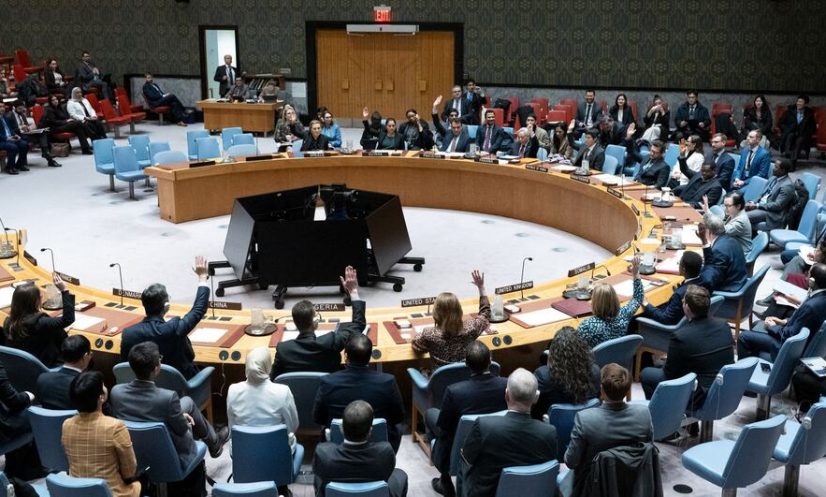
The UN Security Council marked the 25th anniversary of the 9/11 attacks with a briefing on counter-terrorism, as ambassadors assessed how the threat has evolved dramatically since Resolution 1373 established the Council’s counter-terrorism framework in 2001.
Briefers highlighted the growing use of artificial intelligence, drones and encrypted platforms by militant groups for recruitment and attack planning.
Council members are also set to adopt a presidential statement — the Council’s first on terrorism in five years — following reportedly tense negotiations over references to specific groups and language on emerging technologies.
The Security Council heard that terrorism is evolving rapidly, driven by emerging technologies, transnational networks and uneven national capacities. Speakers stressed the need for stronger judicial cooperation, responsible regulation of AI, deeper partnerships with the private sector and greater support for vulnerable countries.
While post-9/11 counter-terrorism efforts have achieved significant progress, terrorist groups continue to adapt their tactics. Speakers warned that without renewed action, gaps in technology governance, international cooperation and capacity-building could undermine global security and resilience.
Jérôme Bonnafont of France, the Council President for September, said his country had participated in the coalition in Afghanistan since 2001, helped fight Al-Qaida affiliates in the Sahel and remained mobilised within the Global Coalition against Da’esh in the Middle East.
Terrorism is using “our own innovations against us”, he said, adding that Da’esh, Al-Qaida and their affiliates continue to carry out cross-border attacks far from their bases.
Terrorists are hijacking new technologies and professionalising their propaganda methods, attracting younger recruits and exploiting new financing technologies, he said.
The Council must renew the leadership role it took in the aftermath of the attacks, including by establishing an effective system to combat terrorists’ use of new technologies, Bonnafont said.
Citing the experience of Africa, Victoria Lieta Liolocha of the Democratic Republic of the Congo said the Allied Democratic Forces “continue to sow death and destruction amongst the civilians — murders, kidnappings, violence against women and children and forced displacements”.
However, collective action “also means that we should be able to agree on what it is that we’re fighting”, she said.
Despite decades of efforts, the international community “still does not have a universally accepted definition of terrorism”.
This requires continued efforts to “reach a consensus that will make it possible to fight terrorism with the necessary firmness, without ambiguity and in accordance with international law”, she said.
Asim Iftikhar Ahmad of Pakistan said his country had played a key role as a frontline state in the global counter-terrorism effort.
The most notable successes in the international campaign against Al-Qaida were achieved through Pakistan’s counter-terrorism efforts and active cooperation, he said.
“This came with immense sacrifice,” he added, noting that terrorist violence had resulted in the deaths of 90,000 Pakistanis and caused sustained economic damage since the turn of the century.
The Council’s current sanctions regimes are proving insufficient to combat terrorism in all its forms, he said.
Speakers called on the Council to move from commitments to implementation by strengthening international cooperation, responsibly governing emerging technologies, investing in prevention and resilience, supporting high-risk countries and ensuring that all counter-terrorism measures comply with international and human rights law.