Play store

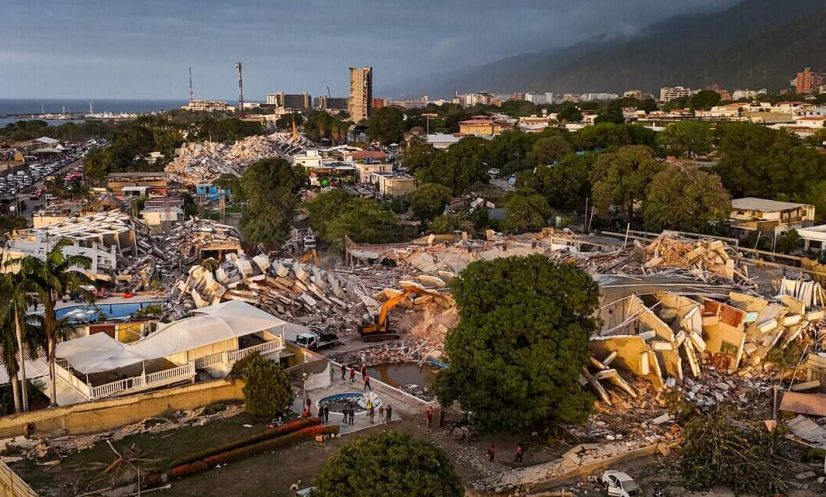
Venezuela’s devastating earthquake disaster entered its sixth day on Tuesday, with the official death toll rising to 1,943 as rescuers continued searching for survivors and public anger mounted over what many residents described as a slow government response.
The twin earthquakes, measuring 7.2 and 7.5 in magnitude, struck north-central Venezuela on June 24 just 39 seconds apart. According to updated government figures, the disaster has injured 10,571 people and displaced 15,866 others.
National Assembly President Jorge Rodríguez, who is overseeing the government’s response, said 689 aftershocks have been recorded since the main quakes, although both their frequency and average strength appear to be declining.
“We must remain relentless in the search for people who are alive,” Rodríguez told reporters. “We must keep hope alive that more survivors can still be found beneath the rubble.”
In a rare breakthrough, rescue workers pulled a two-year-old child alive from the ruins of a collapsed building in the coastal state of La Guaira early Tuesday, nearly 140 hours after the earthquakes. The rescue came a day after another child was found alive, raising hopes of further miracle rescues despite rapidly diminishing survival chances.
La Guaira remains the worst-hit area, particularly the coastal communities of Caraballeda and Catia La Mar, where apartment buildings and commercial structures collapsed. Of the 855 buildings officially reported as damaged nationwide, 189 have completely collapsed, including 158 in La Guaira alone.
Authorities estimate nearly 30,000 people were in the hardest-hit areas when the quakes struck. Around 19,861 people are believed to have survived after escaping on their own or being rescued by emergency teams.
However, the number of people still missing remains unclear. Government records show tens of thousands of people have been reported missing by relatives, while international aid agencies estimate that around 50,000 people may still be unaccounted for or trapped beneath collapsed buildings.
A preliminary assessment based on satellite radar imagery suggests the destruction could be far greater than official figures indicate, estimating that up to 58,870 buildings may have been damaged or destroyed across the affected region.
The international relief effort continues to expand. Rodríguez said 51 foreign delegations have deployed 3,660 rescue personnel, along with canine search units and support vehicles. More than 26,000 Venezuelan emergency and security personnel, supported by over 15,000 volunteers, are also involved in rescue and relief operations.
Authorities said 69 emergency shelters are housing thousands of displaced people, while millions of litres of drinking water have been distributed. Electricity has largely been restored in La Guaira, though telecommunications remain only partially operational.
Despite the growing relief effort, frustration is mounting in several affected communities, where residents say government assistance has been slow and they are relying on neighbours and volunteers for food and essential supplies.
The disaster has also intensified political tensions, with opposition leader María Corina Machado claiming authorities blocked her return to Venezuela from Panama as she sought to assist earthquake victims.
As rescue operations continue, the earthquake has become the biggest challenge yet for Venezuela’s interim government, with experts warning that the humanitarian crisis could have lasting political consequences alongside the immense human tragedy.