Play store

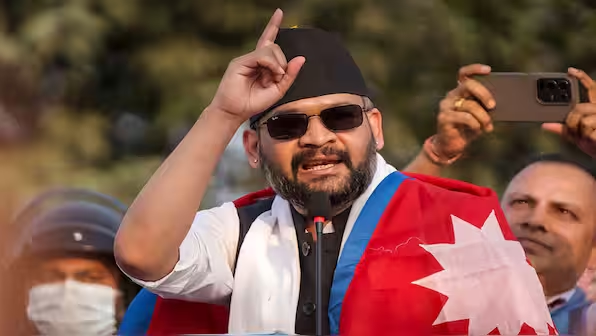
Nepal’s youth-backed government led by Prime Minister Balen Shah is facing its first major challenge as hundreds of protesters took to the streets of Kathmandu 12 July, demanding justice for evicted squatters and an end to alleged rights violations.
According to a report by NDTV, the demonstrations were organised by the Joint National Squatters Front outside a major government office in Nepal’s capital, with protesters carrying placards demanding an end to “atrocity against the poor”, respect for human rights, an end to illegal arrests and proper shelter for displaced people.
The protests, which began against the Kathmandu Metropolitan City Police’s eviction drive, have intensified in recent days after the government removed landless communities from settlements without providing a clear resettlement plan.
The Business Standard Google News Keep updated, follow The Business Standard’s Google news channel
The movement has gained a distinct Gen-Z character, with young activists criticising the government’s handling of the evictions and highlighting what they described as “inhuman” conditions faced by displaced families living in temporary holding centres.
Local media reports said several activists, students and journalists have been arrested for raising concerns over the conditions at the centres.
The latest demonstrations come after a 25-year-old protester, Ganesh Nepali, reportedly set himself on fire earlier this month in Kathmandu following an alleged dispute with city police over a wheel lock placed on his motorcycle.
The protests have drawn comparisons with the Gen-Z-led anti-government movement last year that ended the tenure of former prime minister KP Sharma Oli and his government. Shah, who had supported that movement, later rose to power with strong backing from young voters.
The eviction campaign began in April across Kathmandu Valley and other parts of Nepal, with authorities dismantling structures belonging to more than 2,600 families, affecting around 15,000 people, according to NDTV.
Of those displaced, around 325 families have been living in temporary holding centres in different parts of Kathmandu.