


 Play store

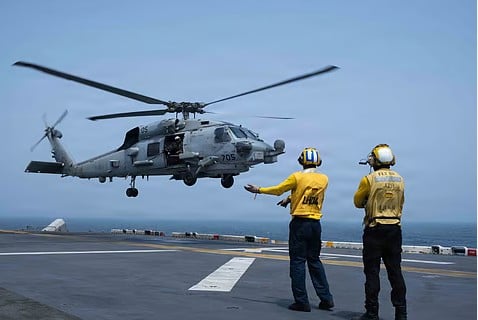
The United States launched a fresh wave of air strikes across Iran on Wednesday, extending its military campaign into an 11th consecutive night, as Defence Secretary Pete Hegseth revealed that the conflict has already cost Washington an estimated $37.5 billion, underscoring the mounting financial and geopolitical toll of the expanding war.
The latest attacks targeted multiple locations across Iran, with explosions reported in the southern port city of Bushehr, the northwestern city of Tabriz, the southeastern port of Chabahar, and the western provinces of Kurdistan and Ilam. Iranian authorities said the strikes caused damage to military-related facilities, although the full extent of casualties and destruction was not immediately disclosed.
Tehran responded by claiming responsibility for drone attacks on U.S. military facilities at Camp Doha in Kuwait, saying ammunition depots and logistics infrastructure were among the targets. The exchanges marked another sharp escalation in a conflict that has increasingly drawn neighbouring countries into its orbit.
The U.S. military also confirmed that a third American soldier wounded in an earlier Iranian-backed attack in Jordan had died, bringing the total number of U.S. military fatalities in the conflict to 18.
Speaking at the Pentagon, Hegseth said the war had so far cost the United States approximately $37.5 billion. However, defence analysts cautioned that the figure may significantly understate the actual financial burden. They argued that replacing advanced missiles, aircraft, drones and damaged military infrastructure, along with sustaining prolonged operations across the Middle East, could eventually push the overall cost to several times that amount.
The growing expense has fuelled an increasingly bitter political debate in Washington. The Trump administration is facing criticism from Democratic lawmakers after requesting an additional $70 billion in emergency military funding to sustain operations.
Senator Patty Murray warned against allowing the conflict to become another prolonged military engagement, saying the United States risked entering another “forever war.” Senator Kirsten Gillibrand also criticised the administration, arguing that billions of dollars were being directed toward military operations while pressing domestic priorities, including healthcare, affordable housing and education, remained underfunded.
The conflict is also sending shockwaves through global energy markets. Brent crude oil prices climbed above $92 per barrel, reflecting growing fears of supply disruptions. Shipping through the strategically vital Strait of Hormuz has slowed dramatically, with reports indicating that almost no large oil tankers transited the waterway on Tuesday as security concerns intensified.
The regional fallout has extended beyond military operations. In Kuwait, authorities have introduced electricity rationing during the peak summer season after Iranian strikes reportedly damaged parts of the country’s power infrastructure, highlighting the widening humanitarian and economic consequences of the conflict.
Diplomatic efforts have shown little sign of progress. U.S. Secretary of State Marco Rubio said Washington remained willing to engage in negotiations but accused Tehran of failing to approach talks seriously.
President Donald Trump further heightened tensions by warning that the United States could soon launch a major strike against a suspected Iranian nuclear facility known as “Pickaxe Mountain.” Iranian officials responded by threatening to broaden the conflict across the region if such an attack takes place.
With both sides continuing to exchange military blows and political rhetoric hardening, analysts warn that the conflict has entered a dangerous cycle of escalation, leaving prospects for an early diplomatic breakthrough increasingly remote.