


 Play store

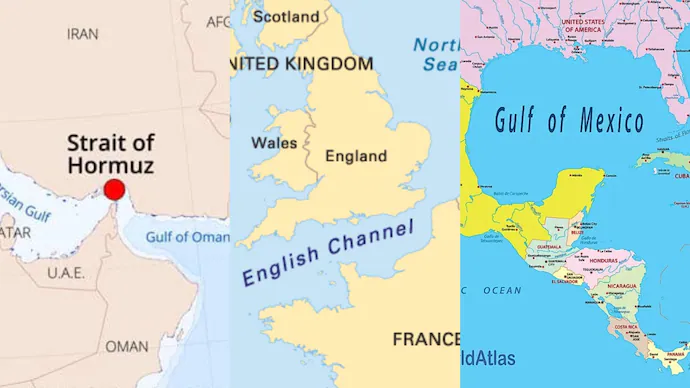
The Strait of Hormuz and a handful of other strategic maritime chokepoints have shaped global trade and international power struggles for centuries. As tensions rise in the Gulf, shipping experts warn that these narrow waterways—through which much of the world’s energy supplies and commercial cargo pass—are once again at the centre of geopolitical uncertainty.
Iran’s growing influence over the Strait of Hormuz, combined with threats from Yemen’s Houthi rebels to disrupt shipping in the Red Sea, has renewed concerns over the security of two of the world’s most important maritime corridors. The Houthis have targeted vessels linked to Saudi Arabia and could also threaten traffic through the Bab el-Mandeb Strait, the gateway to the Suez Canal.
Hormuz and Bab el-Mandeb are among a dozen strategic straits that serve as vital arteries for international commerce. Every year, millions of tonnes of oil, liquefied natural gas, raw materials and manufactured goods pass through these narrow sea lanes aboard tankers, bulk carriers and container ships.
The principle of free navigation through international straits is protected under the 1982 United Nations Convention on the Law of the Sea (UNCLOS), often described as the constitution of the oceans. The convention guarantees ships the right of passage without tolls through natural straits, unlike man-made canals such as Suez and Panama, where transit fees are charged by the countries that operate them.
Although Iran has not ratified UNCLOS, it has generally observed its provisions under customary international law. However, recent discussions in Tehran about introducing fees for vessels transiting the Strait of Hormuz have raised concerns over the future of one of the world’s busiest shipping routes.
The strategic importance of these waterways dates back more than 500 years. Portugal sought to dominate Hormuz in the early 16th century to control the lucrative spice trade with Asia. Later, the Dutch championed the doctrine of Mare Liberum, or “Freedom of the Seas,” arguing that the oceans should remain open to all nations. Britain and, later, the United States adopted similar principles while simultaneously building naval bases near key maritime chokepoints to protect their commercial and strategic interests.
Today, the Strait of Malacca, linking the Indian and Pacific Oceans, carries one of the world’s largest volumes of maritime trade, particularly cargo bound to and from China. Other strategically significant waterways include the Danish Straits, which control access to the Baltic Sea, and Turkey’s Bosphorus and Dardanelles, which are governed under the 1936 Montreux Convention.
Analysts believe competition over these maritime gateways is likely to intensify in the coming years. Rising tensions in the Taiwan Strait, disputes in Southeast Asia and concerns over freedom of navigation underscore the growing strategic importance of these narrow sea passages, making them critical flashpoints in global trade and international security.