Play store

India’s capital remained on edge on Wednesday as thousands of supporters of the youth-led Cockroach Janata Party (CJP) gathered at Jantar Mantar, vowing to march toward Parliament in a major escalation of protests demanding the resignation of Union Education Minister Dharmendra Pradhan over alleged irregularities in the NEET medical entrance examination.
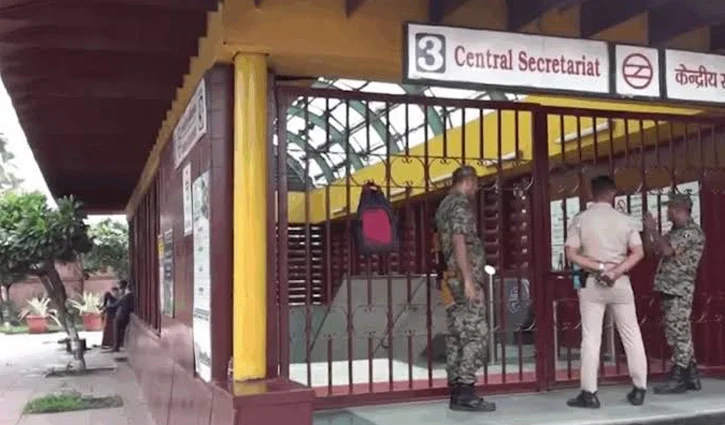
Authorities responded with sweeping security measures, sealing off key roads across central New Delhi, erecting heavy barricades around Parliament and government buildings, and shutting down 16 Delhi Metro stations to prevent protesters from reaching the high-security zone.
According to Hindustan Times, CJP spokesperson Saurabh Das shared images on social media showing rapidly growing crowds at the protest site. Another party spokesperson, Ashutosh Ranka, warned that the movement would intensify if the government continued to ignore its demands.
“If the government refuses to listen, millions more people will join the movement,” Ranka told news agency ANI.
The Ministry of Home Affairs has ordered the deployment of 20 additional companies of the Central Reserve Police Force (CRPF), with personnel being brought in from West Bengal to reinforce security in the capital.
Heavy barricading remained in place around Parliament House, Rafi Marg and other strategic locations, while Delhi Metro Rail Corporation suspended services at major transit stations, including Rajiv Chowk, ITO and Mandi House, until further notice.
The latest demonstrations come just days after the “Chalo Parliament” march on Monday turned violent. Police have registered six First Information Reports (FIRs) over incidents of vandalism and clashes in areas including Parliament Street and Connaught Place. According to PTI, investigators suspect a “larger criminal conspiracy” behind the unrest.
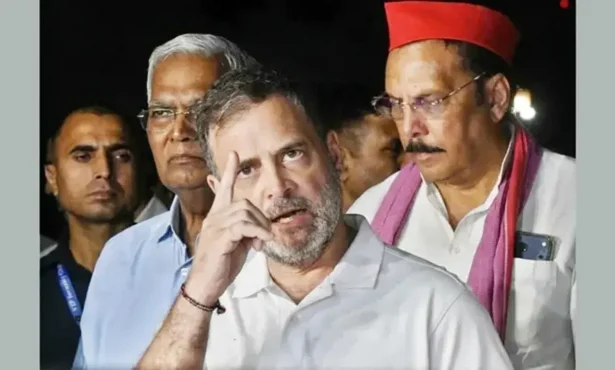
The protests have also triggered political reactions across India. Congress units in Kerala, Jammu and Kashmir, Assam and several other states staged demonstrations against alleged police action on student protesters and the detention of senior party leaders Rahul Gandhi and Priyanka Gandhi. On Tuesday, both leaders protested outside Prime Minister Narendra Modi’s residence, while Samajwadi Party chief Akhilesh Yadav was also detained during a separate demonstration near the prime minister’s home.
Monday’s march saw at least 70 protesters detained after police denied permission for the rally and imposed prohibitory restrictions under Section 163. Mobile internet services in parts of the capital were also suspended. Despite the restrictions, thousands assembled at Jantar Mantar before attempting to march toward Parliament.
By the afternoon, clashes had erupted in several parts of central Delhi, including Connaught Place, Patel Chowk, Raisina Road, India Gate and Ashoka Road. Police used batons and tear gas to disperse demonstrators after violence broke out. Several protesters were injured and taken to Lady Hardinge Medical College and Ram Manohar Lohia (RML) Hospital, where one woman remained in intensive care.
Delhi Police said 118 personnel were injured during the violence, alleging that protesters attacked officers with stones and other objects despite repeated warnings to disperse.
Education Minister Dharmendra Pradhan strongly condemned the protests, accusing opposition parties of using students as political tools to disrupt the ongoing monsoon session of Parliament. He said attempts were being made to create disorder in the capital under the guise of student activism.