Play store

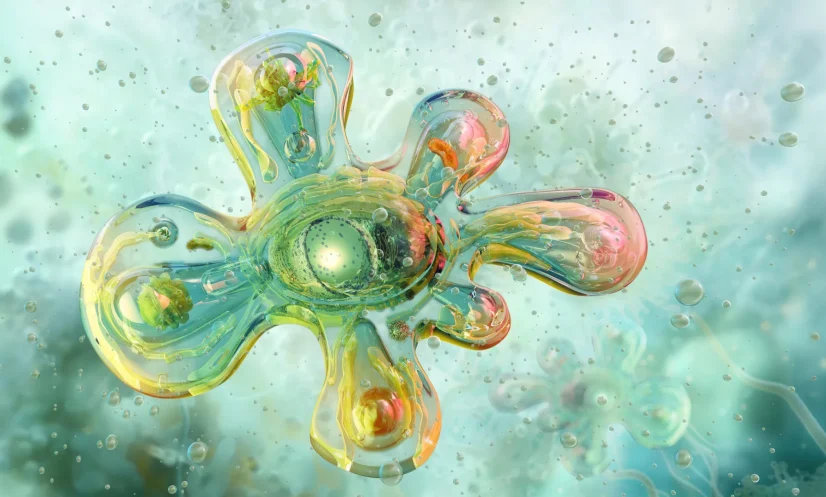
The search for life on Mars and icy moons such as Europa and Enceladus may attract much of the attention in astrobiology, but scientists are also investigating a profound mystery much closer to home: when the first complex cells appeared on Earth and how they paved the way for plants, animals and fungi.
Microbial life dominated Earth for roughly 90 percent of the planet’s history. Understanding how Earth transformed from a world ruled largely by microbes into one filled with complex organisms could offer important clues about whether complex life can emerge elsewhere in the universe.
Life originated more than 3.5 billion years ago, according to Ross Anderson, a paleontologist at the University of Oxford in the UK. Cyanobacteria and oxygen-producing photosynthesis existed by at least 2.3 billion years ago, while eukaryotes had appeared by at least 1.7 billion years ago.
Algae emerged at least one billion years ago and may have appeared considerably earlier. Animals arrived at least 570 million years ago, and possibly somewhat before that.
Anderson says researchers looking for the common ancestor of the plant and animal kingdoms must trace evolutionary history back to around 1.6 billion years ago.
Eukaryotes mark a major evolutionary step
Eukaryotes are considered among the earliest forms of complex life. Unlike simpler cells, eukaryotic cells contain a nucleus that houses their DNA as well as specialized structures known as organelles.
One of the most important organelles is the mitochondrion, which produces energy and helped make more demanding forms of life possible.
Eukaryotes eventually gave rise to complex multicellular organisms and the large, visible forms of life found today. Every animal, plant and fungus is eukaryotic.
Tracing their earliest ancestors, however, is extremely challenging. Organisms more than 500 million years old generally lacked shells and skeletons, leaving scientists dependent on rare geological environments capable of preserving fragile cells and soft tissues.
As a result, scientists have relatively little evidence covering the vast period that accounts for about 90 percent of Earth’s history.
Searching for the rise of multicellular life
Anderson’s research focuses on one of the most important transitions in biological history: the shift from a planet dominated by bacteria to one inhabited by complex multicellular organisms.
Because fossils of early multicellular life are scarce, researchers examine the chemistry of ancient rocks to identify environments where delicate biological material might have survived.
Time presents another major challenge. Eukaryotic microfossils have endured billions of years of geological change and degradation, making their already tiny remains even harder to locate and identify.
Scientists know that multicellular life evolved independently more than once. Anderson is particularly interested in understanding how one of these evolutionary pathways eventually produced the extraordinary diversity of animals seen today.
A major foundation for modern animal diversity emerged around the Ediacaran-Cambrian transition roughly 540 million years ago. During this period, predominantly soft-bodied organisms were followed by the Cambrian explosion, when animals with greater mobility, shells and skeletons became increasingly widespread.
Ancient rocks may hold the clues
Finding evidence of much earlier life requires searching geological settings where fragile biological material had an unusually good chance of surviving.
Anderson and his colleagues are focusing on a roughly 100-square-kilometre region near Svalbard, Norway, at about 80 degrees north. The remote area was once covered by a shallow sea, making it a potentially valuable site for studying ancient marine life.
Australia has also yielded important evidence. Researchers there recently discovered some of the oldest known eukaryotic microfossils, dating to roughly 1.75 billion years ago.
Ancient coastal environments are particularly promising targets because eukaryotes living there would have had access to abundant nutrients and organic material. Such conditions may have supported greater biological diversity and encouraged the development of multicellular life.
Researchers also seek pristine locations that have received little scientific attention. Anderson specializes in studying areas containing enormous clay deposits, which may have helped preserve microscopic remains of ancient eukaryotes.
By piecing together these rare traces, scientists hope to reconstruct one of Earth’s greatest evolutionary transformations — the emergence of complex life from a microbial world — and perhaps gain a better understanding of how likely similar transitions may be on other worlds.