Play store


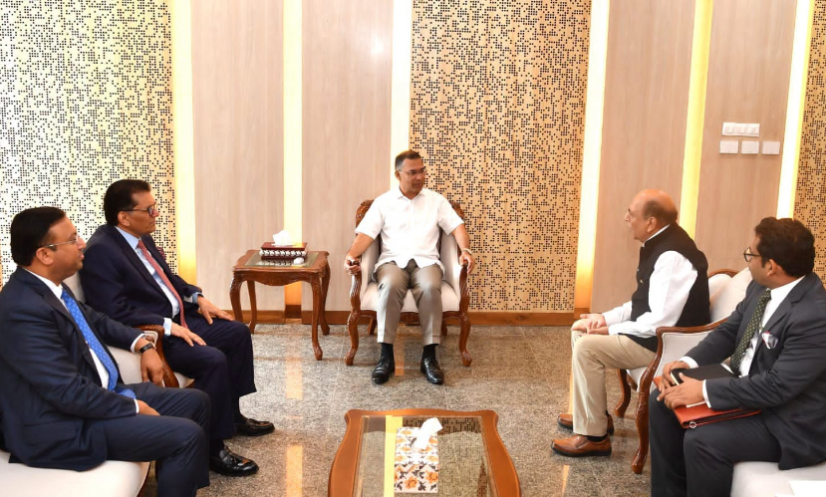
The much-talked-about Bangladesh Prime Minister Tarique Rahman’s maiden visit to India is now seems hanging in the balance as Dhaka seeks a conducive environment for the summit level meeting linking the trip to certain vexed unresolved issues including extradition of ousted Prime Minster Sheikh Hasina and stopping her carrying out anti-Bangladesh media campaign from New Delhi.
The prospect of Tarique Rahman’s visit to India has generated considerable diplomatic interest, but behind the usual language of neighbourhood diplomacy, mutual interests and strategic engagement lies a far more complicated political reality. Any summit-level bilateral meeting between the two countries may appear desirable from a conventional diplomatic perspective. Yet, for such a meeting to produce meaningful results, India must first confront the deep distrust that has developed among a large section of the Bangladeshi public over its long-standing relationship with Sheikh Hasina and her government.
The central dilemma is therefore not simply whether Tarique Rahman should visit India. The deeper question is whether the political circumstances currently allow such a visit to be interpreted positively by the Bangladeshi people.
For years, India was perceived by many Bangladeshis as the strongest external supporter of Sheikh Hasina’s government. New Delhi maintained close political, security and diplomatic ties with her administration even as allegations of authoritarianism, political repression, enforced disappearances, extrajudicial killings and restrictions on political opposition became increasingly prominent. Whatever India’s strategic calculations may have been, the public perception in Bangladesh was that New Delhi had prioritised the interest and stability of the Shekh government over the broader democratic aspirations and grievances of the Bangladeshi people.
That perception cannot be erased simply through diplomatic statements or a high-profile bilateral meeting. India therefore faces a difficult task before it can expect a reset in relations. It needs to address the political and emotional wounds left by its association with the previous regime. This is particularly important because Bangladesh’s July Mass Uprising has fundamentally changed the country’s political landscape. For many Bangladeshis, the uprising has become a defining moment of political legitimacy.
In such circumstances, a summit between Tarique Rahman and Indian leaders cannot be treated as a routine diplomatic engagement. The symbolism surrounding the visit will matter as much as the substance.
In bilateral relations, governments are important, but governments do not exist in isolation from their people. This is especially true for two geographically connected neighbours such as Bangladesh and India. Long-term relations depend not only on agreements between officials but also on public perceptions, political legitimacy and popular trust.
India has strategic reasons to improve relations with the government of Tarique Rahman. Bangladesh is important to India because of geography, trade, connectivity, border management, security cooperation and regional geopolitics. Bangladesh, in turn, has its own reasons to maintain constructive relations with India. Neither country can afford a permanently hostile relationship.
But strategic necessity does not automatically translate into political acceptance. This is where the dilemma surrounding Tarique Rahman’s proposed India visit becomes particularly acute. If he visits India without a significant change in New Delhi’s approach to the legacy of Sheikh Hasina’s rule, the visit could be portrayed by political opponents as a compromise with a country that failed to stand with the Bangladeshi people during their darkest period. Even if the actual purpose of the visit is to improve bilateral relations, its domestic political interpretation could be very different. For Tarique Rahman, therefore, the political cost of the visit cannot be ignored.
India appears to have recognised at least part of this changing reality. In recent weeks, New Delhi has sought to distance itself from some of Sheikh Hasina’s activities from India. Indian officials have indicated that the government does not endorse what she is currently doing against Bangladesh. New Delhi has also distanced itself from her controversial August 5 press briefing, which she was reportedly allowed to stage despite warnings from Dhaka.
Such distancing is certainly a step away from the previous position. But it is unlikely to be sufficient. The problem is no longer limited to Sheikh Hasina’s activities in India. It concerns India’s broader political association with her rule. For many Bangladeshis, the question is not merely whether India supports Sheikh Hasina today. It is whether India recognises the suffering associated with her years in power and understands why its support for her government generated such deep resentment.
If India wants to rebuild public confidence, it may need to go beyond tactical distancing and address the allegations of serious abuses associated with the previous regime. Acknowledging the violence and killings surrounding the July Mass Uprising would send a stronger message than simply saying that India does not support Sheikh Hasina’s current political activities.
Diplomacy, however, rarely operates through straightforward moral calculations. States generally prioritise strategic interests, and India is no exception. New Delhi has historically viewed Bangladesh through the lens of security, border stability, connectivity and regional influence. Sheikh Hasina’s government was considered a dependable partner on many of these issues.
That strategic relationship may explain India’s earlier position, but it does not necessarily explain the current political reality. Bangladesh has changed, and India must adjust to that change. The old political equation in Dhaka cannot simply be reconstructed. The political legitimacy of the Tarique Rahman government is not rooted only in the 12 February 2026 general election. It is also deeply connected to the political legacy of the July Mass Uprising. For India, this means that dealing with the new government requires understanding the political narrative that brought it to power.
This is also why a reported carrot-and-stick approach to persuade Tarique Rahman to visit India appears increasingly ineffective. Diplomatic incentives, political assurances or pressure tactics may work under ordinary circumstances. But when a foreign visit becomes intertwined with questions of national dignity and public memory, conventional diplomatic instruments lose much of their effectiveness.
The crude reality is that Tarique Rahman cannot easily separate his foreign policy decisions from public sentiment. Nor can India.
A bilateral summit could be useful if it is preceded by genuine confidence-building measures. A meeting between the two prime ministers could open discussions on trade, water sharing, border management, energy, connectivity, security and regional cooperation. It could also help move the relationship away from recent tensions.
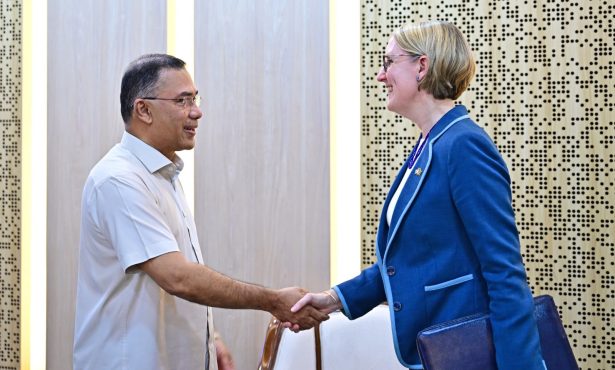
But a summit cannot substitute for reconciliation. If the underlying political grievances remain unresolved, a highly publicised meeting may create more controversy than goodwill. Images of leaders shaking hands can generate headlines, but they cannot by themselves repair years of accumulated distrust.
India therefore has a choice. It can continue to approach Bangladesh primarily through the government-to-government channel, hoping that strategic interests will eventually overcome public resentment. Or it can recognise that the future of the relationship increasingly depends on winning the confidence of the Bangladeshi people.
The second approach would require greater political sensitivity. India does not necessarily need to abandon its national interests or accept every political narrative emerging from Bangladesh. Nor should bilateral diplomacy become a public exercise in assigning blame. But New Delhi could acknowledge that its previous support for Sheikh Hasina’s government created a serious credibility problem among Bangladeshis. A carefully calibrated expression of regret, coupled with a clear rejection of political violence and human rights abuses, could help create conditions for a more constructive relationship.
A meaningful reset requires recognition of the political transformation that has taken place in Bangladesh. It requires India to understand that the Bangladeshi public is now a much more important factor in bilateral relations than it was before. It also requires the government in Dhaka to balance national sentiment with the practical necessity of maintaining constructive relations with its neighbour.
Ultimately, Tarique Rahman’s India visit should take place not as a concession to diplomatic pressure, but as part of a relationship based on mutual respect, equality and public confidence. India may want the visit. Bangladesh may also benefit from it. But neither side can afford to ignore the political reality surrounding it.
The crude reality is that before India can expect a genuinely meaningful summit with Prime Minister Tarique Rahman, it must first heal the wounds created by its perceived support for Sheikh Hasina’s authoritarian rule. Without addressing that legacy, a summit may produce diplomatic photographs, formal statements and temporary headlines—but it is unlikely to produce a durable reset in India-Bangladesh relations.