Play store

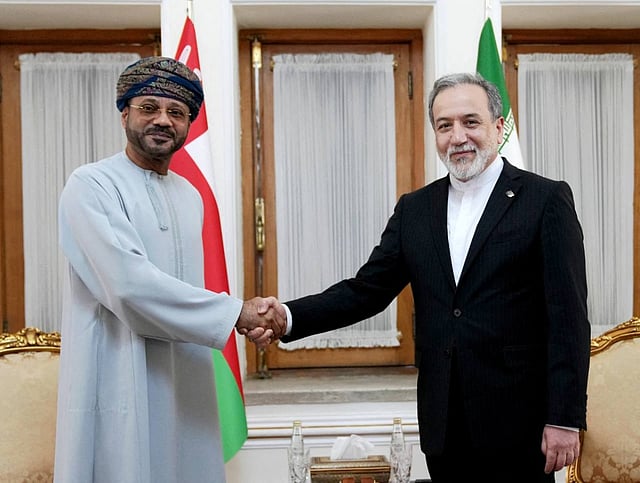
Oman has called for a comprehensive regional security framework involving all eight countries bordering the Gulf, including Iran and Iraq, urging them to sign a non-aggression pact to promote lasting peace and stability.
Omani Foreign Minister Sayyid Badr bin Hamad Al Busaidi made the proposal during a lecture titled Comprehensive Security in the Gulf at the University of Cambridge in the United Kingdom on Monday.
He said the framework should include all six members of the Gulf Cooperation Council (GCC)—Bahrain, Kuwait, Oman, Qatar, Saudi Arabia and the United Arab Emirates—alongside Iran and Iraq.
Al Busaidi argued that excluding Iran from regional security arrangements for nearly five decades had negatively affected the entire region.
He said lasting stability would remain difficult to achieve without Iran’s participation in a collective security system.
The minister called for renewed regional dialogue, with a non-aggression pact among the eight countries serving as its central objective.
Such an agreement, he said, would help build mutual trust, address shared security concerns and establish a more stable regional order.
He also stressed that Gulf countries should take greater responsibility for their own security instead of relying excessively on external powers.
According to Al Busaidi, foreign involvement had complicated efforts to resolve disputes over Iran’s nuclear programme and ensure freedom of navigation through the strategically important Strait of Hormuz.
He said external partnerships should continue but gradually place greater emphasis on economic cooperation and investment rather than playing the primary role in regional security arrangements.
Recalling a meeting of foreign ministers from all eight Gulf states in Muscat in November 1976, Al Busaidi called for reviving the spirit of that initiative to establish collective security.
The earlier meeting sought to develop a regional security arrangement but was not followed by another gathering involving all eight countries.
The Omani foreign minister acknowledged that longstanding mistrust and recent conflicts would make negotiations difficult.
However, he urged regional governments to begin dialogue without delay.
He also highlighted Oman’s diplomatic efforts to facilitate negotiations between Iran and the United States and explore arrangements to ensure safe maritime passage through the Strait of Hormuz.
Al Busaidi said a sustainable security framework must be developed and implemented primarily by the countries of the region themselves.
He expressed hope that renewed cooperation among the eight Gulf states could turn the vision of inclusive regional security into reality.