Play store

Bangladesh’s aviation industry is entering a new era, and the world’s biggest airport service companies want to be part of it.
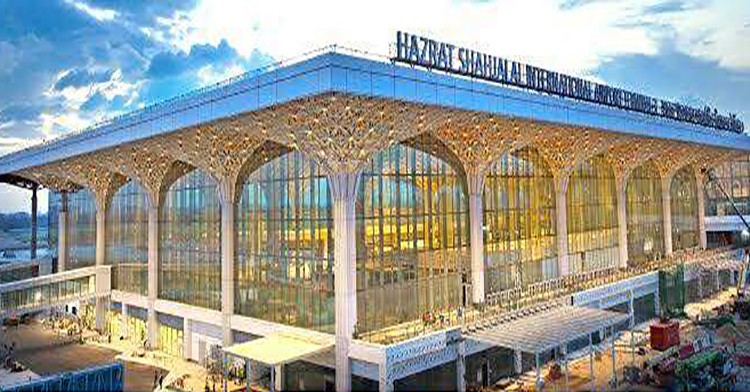
As the country prepares to launch the much-anticipated Third Terminal at Hazrat Shahjalal International Airport (HSIA), five globally renowned airport service providers are competing for the opportunity to manage passenger ground handling operations. Their interest signals more than a commercial contest. It reflects growing international confidence in Bangladesh’s aviation ambitions and its potential to become a key regional aviation hub.
For decades, Bangladesh’s airport ground handling services remained largely unchanged, with national flag carrier Biman Bangladesh Airlines holding exclusive responsibility. The Third Terminal, however, is poised to reshape that landscape by introducing competition for passenger handling for the first time since the country’s independence, a move many industry observers describe as one of the most significant reforms in Bangladesh’s civil aviation sector.
The Civil Aviation Authority of Bangladesh (CAAB) has decided to appoint a second passenger ground handling operator for the Third Terminal while retaining cargo handling exclusively under Biman Bangladesh Airlines.
According to a senior CAAB official involved in the negotiations, the new operator’s responsibilities will be confined to passenger-related ground services.
“The second handler will be limited to passenger and ground handling activities. Cargo handling will remain solely with Biman,” the official said.
The companies expressing interest represent some of the biggest names in the global aviation services industry. They include UK’s Menzies Aviation, Switzerland’s Swissport, Türkiye’s Çelebi Aviation Holding, UAE-based dnata, part of the Emirates Group, and Singapore’s SATS.
Collectively, these companies manage airport operations at hundreds of airports across the world, handling millions of passengers and thousands of aircraft every day. Their interest in Bangladesh underscores how the country’s aviation market is increasingly attracting global attention.
Industry analysts say such competition would have been difficult to imagine even a decade ago. Bangladesh has witnessed steady growth in passenger traffic, expanding international routes, rising business travel and increasing demand for air cargo services. Combined with major infrastructure investments, particularly the construction of the Third Terminal, these developments have significantly enhanced the country’s profile among international aviation operators.
The competition has not been limited to boardrooms. Over recent months, ambassadors from the United Kingdom, Switzerland, Türkiye and the United Arab Emirates have separately discussed their respective companies’ interests with Bangladesh’s aviation authorities.
Former CAAB Chairman Air Vice-Marshal (retd.) Muhammad Mafidur Rahman believes such diplomatic engagement illustrates the commercial significance of Bangladesh’s expanding aviation market.
“Bangladesh has rarely attracted simultaneous interest from so many internationally recognised aviation companies,” he said.
According to him, the involvement of foreign diplomatic missions demonstrates that Bangladesh is increasingly viewed as a promising long-term aviation destination, not only for airlines but also for airport infrastructure and service providers seeking future growth.
Ground handling may take place behind the scenes, but it plays a critical role in determining how efficiently an airport functions.
The services include aircraft parking, baggage handling, passenger check-in, boarding support, aircraft loading and unloading, ramp operations, aircraft servicing and turnaround management.
Every minute an aircraft spends on the ground affects airline operating costs. Efficient ground handling helps reduce delays, improve safety, increase aircraft utilisation and enhance passengers’ travel experience.
Globally, many airports rely on multiple specialised ground handling companies that compete on service quality, technology and operational efficiency.
Bangladesh’s decision to introduce competition is therefore seen as a move towards international best practices.
Foreign airlines operating in Dhaka have long argued that allowing more than one ground handler would improve operational performance, reduce aircraft turnaround times and bring Bangladesh closer to global service standards.
Leaders within Bangladesh’s aviation sector have broadly welcomed the government’s decision.
Managing Director of Novoair and Secretary General of the Airline Operators Association of Bangladesh (AOAB) Mofizur Rahman described the introduction of competition as a positive step.
“I think the issue deserves careful consideration, even if it is addressed at a later stage. For now, however, I am happy that competition is at least being introduced in passenger handling services,” he said.
Noted aviation entrepreneur and Chairman of TAS Aviation Group K M Mozibul Hoque echoed similar views.
He argued that both ground handling and cargo village operations should ideally be managed by internationally experienced operators capable of maintaining world-class standards.
“Ownership may remain with the government, but operations should be entrusted to proven global companies,” he said.
According to him, experienced international operators can strengthen operational efficiency, improve safety and regulatory compliance, enhance customer service and transfer valuable technical expertise to Bangladeshi professionals.
Such knowledge transfer, industry experts say, could play an important role in developing a skilled aviation workforce capable of managing increasingly sophisticated airport systems.
While the decision to introduce competition in passenger services has been widely welcomed, CAAB’s decision to leave cargo handling exclusively with Biman Bangladesh Airlines has generated debate.
The Third Terminal’s Cargo Village is equipped with advanced automated systems designed to significantly improve cargo processing capacity and efficiency.
Some industry stakeholders question whether Biman alone possesses the operational expertise required to fully utilise these sophisticated facilities.
“There are sufficient questions about whether Biman’s cargo handling is up to international standards. There are serious concerns regarding both capability and integrity,” Mofizur Rahman said.
Former CAAB Chairman Mafidur Rahman also suggested that international collaboration could have maximised the benefits of the new cargo infrastructure.
“The equipment installed is state-of-the-art and requires experienced operators,” he said.
“It would have been better if an experienced international operator had worked alongside Biman initially so that knowledge could be transferred before moving to a fully local operation.”
Nevertheless, he remained optimistic about the sector’s future.
“There is nothing to be disappointed about. If expert professionals are utilised properly, the aviation sector will gain new dynamism,” he said.
Biman Bangladesh Airlines, however, says it is fully prepared to operate both passenger and cargo services at the new terminal.
General Manager (Public Relations) Boshra Islam said the national carrier has already invested heavily in preparation for the terminal’s opening.
According to her, Biman has procured the necessary ground handling equipment and recruited more than 1,000 additional personnel to support operations.
“We are ready to conduct passenger and cargo handling operations at the Third Terminal,” she said.
She added that Biman is currently working with the Japanese consortium responsible for the terminal’s operation and maintenance arrangements regarding cargo handling procedures.
Boshra also noted that Biman has not yet received any official communication from CAAB regarding the appointment of a second passenger ground handling operator.
The Third Terminal is expected to transform Bangladesh’s principal international gateway by expanding passenger capacity, improving operational efficiency and enabling future traffic growth.
Its operation and maintenance will be overseen by a Japanese consortium comprising Japan Airport Terminal Company, Sumitomo Corporation, Nippon Koei and Narita International Airport Corporation following the signing of the final agreement.
Beyond new infrastructure, however, industry observers say the international competition for ground handling contracts may prove equally significant.
For Bangladesh, attracting some of the world’s leading airport service providers represents a strong endorsement of the country’s growing aviation market and broader economic potential. Whether through global expertise, technology transfer or higher service standards, the reforms surrounding the Third Terminal could help reshape the passenger experience while strengthening Bangladesh’s position in South Asia’s increasingly competitive aviation landscape.