Play store

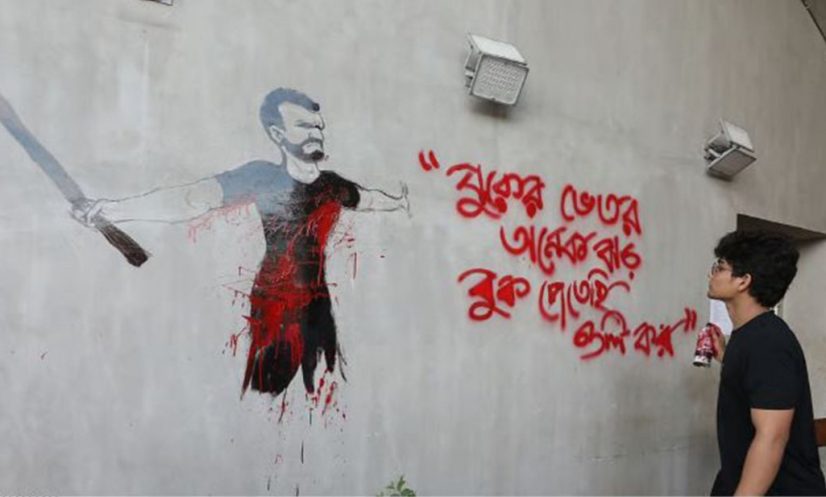
The country is observing July Martyrs’ Day today, marking the death anniversary of Abu Sayeed, the first protester killed during the July-August 2024 mass uprising, and paying tribute to all those who lost their lives in the movement.
The Professor Muhammad Yunus-led interim government declared July 16 as July Martyrs’ Day to commemorate Abu Sayeed, who was shot dead by police in Rangpur on July 16, 2024, while taking part in demonstrations against the discriminatory quota system in public-sector recruitment.
His killing marked a turning point in the uprising, transforming a student-led anti-quota protest into a nationwide movement that culminated in the fall of the Awami League government and the departure of former prime minister Sheikh Hasina from the country.
To mark the day, the government has declared a one-day state mourning. National flags are flying at half-mast at government, semi-government and autonomous institutions, educational establishments and Bangladesh missions abroad.
In separate messages, President Mohammed Shahabuddin and Chief Adviser Professor Muhammad Yunus paid tribute to the martyrs, describing the July uprising as a historic struggle against discrimination, repression and authoritarian rule, and reaffirmed their commitment to building a just, democratic and inclusive Bangladesh.
Abu Sayeed, 25, was an English department student at Begum Rokeya University, Rangpur, and a coordinator of the Anti-Discrimination Student Movement.
Footage of him standing with his arms outstretched moments before being shot turned him into an enduring symbol of the uprising.
At least six people, including Abu Sayeed, were killed on July 16 after clashes involving law enforcers and Awami League activists. His death galvanised the movement and drew international attention.
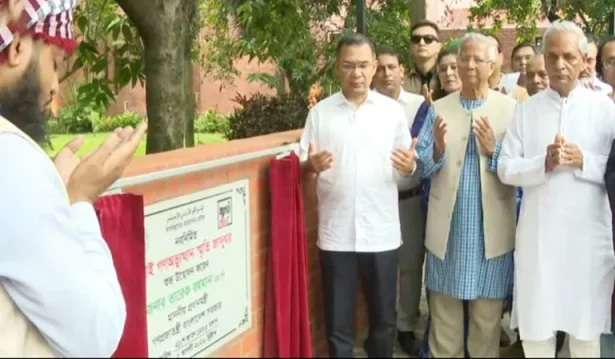
As part of the day’s observance, the foundation stone of a memorial for Abu Sayeed is being laid at Begum Rokeya University in the presence of Liberation War Affairs Minister Ahmed Azam Khan. State Minister Ishraque Hossain is also scheduled to lay the foundation stone of a memorial for martyr Wasim Akram in Pekua, Cox’s Bazar.
A photography exhibition titled “Campus Scars” is also being held to commemorate the attacks on students on university campuses on July 15.
Meanwhile, Abu Sayeed’s family has renewed its call for harsher punishment for those convicted over his killing. His elder brother, Abu Hossain, demanded a review of the verdict and the execution of the two former police officers sentenced to death.
On April 9, the International Crimes Tribunal-2 convicted all 30 accused in the crimes against humanity case over Abu Sayeed’s killing.
Two former policemen were sentenced to death, three senior police officials received life imprisonment in absentia, while the remaining 25 convicts—including university officials, teachers, police officers and former Bangladesh Chhatra League leaders—were handed prison terms ranging from three to 20 years.