Play store

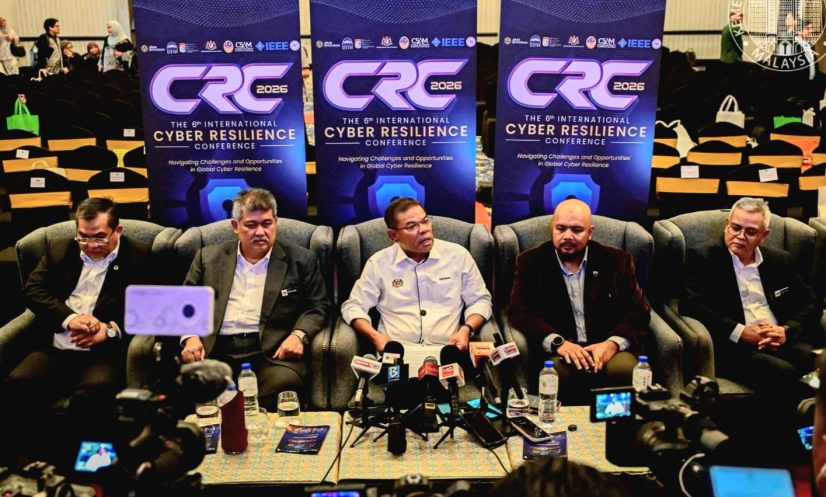
Ahmadul Kobir, Malaysia: Malaysia’s Home Minister Datuk Seri Saifuddin Nasution Ismail has called for stronger national preparedness to tackle increasingly complex cyber threats, stressing that cybersecurity must go beyond preventing attacks to include rapid response, recovery and the ability to adapt to disruptions.
He made the remarks on Wednesday while officiating the 6th International Cyber Resilience Conference (CRC 2026) in Bangi, Selangor.
The three-day conference, held from September 1 to 3, brought together policymakers, law enforcement officials, researchers, academics and industry representatives to share knowledge and expertise and strengthen cooperation in addressing emerging cybersecurity threats.
Saifuddin said the rapidly evolving cyber threat landscape required a more integrated and collaborative national approach.
National cybersecurity capabilities, he said, should not focus solely on preventing cyberattacks but must also include the ability to detect and respond rapidly to incidents, restore normal operations and adapt to disruptions.
Such preparedness is essential to ensure that critical national functions and infrastructure can continue operating even when cyberattacks or other digital disruptions occur, he added.
Saifuddin also highlighted the rapid development of artificial intelligence as an emerging challenge for cybersecurity, particularly the growing misuse of deepfake technology.
The increasing use of AI-generated deepfakes, he said, is creating new challenges for detection, digital forensics and law enforcement, while also increasing the risk of fraud, misinformation and other forms of technology-enabled crime.
He said efforts to strengthen cyber resilience must therefore consider not only technological capabilities but also public awareness, victim recovery and prevention strategies that take human behaviour into account.
The proposed establishment of the Cyber Crime Fusion Centre (CCFC) was another key focus of the conference.
A study on establishing the centre has entered its second phase, which involves developing its governance and operational models.
The conference also underscored the need for sustained coordination among government institutions, law enforcement agencies, academia and industry in preventing and combating cybercrime.
Saifuddin said research and innovation should not remain confined to academic institutions but must be translated into effective policies, operational mechanisms and practical solutions that can strengthen Malaysia’s cybersecurity and cyber resilience.
The event was attended by Deputy Secretary-General (Security) of the Ministry of Home Affairs Dato’ Haji Abdul Halim Abdul Rahman, Deputy Secretary-General (Policy and Control) Datuk Haji Makhzan Mahyuddin, directors-general of various departments and agencies, and senior ministry officials.
Speakers at the conference noted that the rapid evolution of technology-driven crimes means cybersecurity can no longer be viewed solely as a technological issue.
Cybersecurity, they said, is increasingly linked to national security, economic stability, public services and the protection of critical infrastructure.
They stressed that stronger coordination among stakeholders, investment in research and innovation, public awareness and effective institutional preparedness would be essential to address future cyber threats and ensure the resilience of Malaysia’s critical systems.