Play store

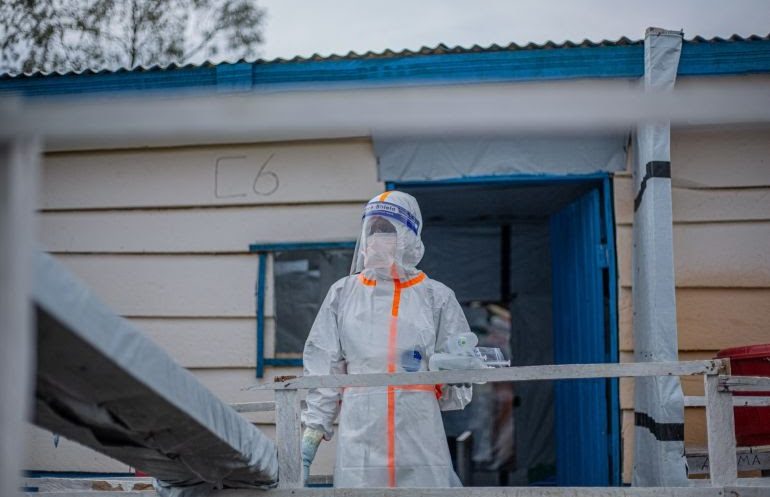
The World Health Organization (WHO) has warned that the Ebola outbreak in the Democratic Republic of the Congo (DRC) is spreading at an unprecedented pace, while neighbouring Uganda has moved closer to being declared Ebola-free after discharging its last remaining patient.
Addressing reporters on Thursday, WHO Director-General Tedros Adhanom Ghebreyesus said the current outbreak has expanded more rapidly than any previous Ebola epidemic recorded in the DRC.
“The 2018-2020 Ebola outbreak took more than 10 months to reach 2,000 confirmed cases. This time, it took only two months,” Tedros said, describing the outbreak as the third-largest Ebola outbreak on record.
According to the WHO, the number of confirmed Ebola cases has surpassed 2,100, with the disease continuing to spread across eastern DRC. The country’s public health institute reported 51 new infections on Wednesday in the provinces of Ituri and North Kivu, while authorities recorded another 62 cases on Thursday.
Health officials warned that the actual number of infections could be significantly higher than the confirmed tally because many suspected cases remain undetected or unreported.
The DRC declared its 17th Ebola outbreak on May 15 after several deaths were reported in the mineral-rich northeastern province of Ituri, where ongoing conflict involving multiple armed groups has complicated response efforts.
Ebola, a severe viral disease transmitted through direct contact with infected bodily fluids, has since spread to five provinces in the DRC and crossed into neighbouring Uganda. However, the overwhelming majority of infections remain concentrated in Ituri.
Tedros expressed concern that more than 80 percent of newly confirmed cases are being detected outside known contact lists, indicating that health authorities are failing to identify and monitor many transmission chains.
“This shows that transmission chains are still being missed,” he said, stressing the need for stronger surveillance, contact tracing and community engagement.
Despite the rapid spread, the WHO chief noted that 377 people have recovered, demonstrating that early diagnosis and appropriate medical care can significantly improve survival and help contain the disease.
The response in the DRC has also been complicated by labour unrest. Healthcare workers at Bunia General Hospital launched a strike on Wednesday, blocking access to the facility and alleging that they had not received compensation for their work since the outbreak began despite operating under extremely challenging conditions.
Meanwhile, Uganda has made significant progress in containing the virus. The country’s Ministry of Health announced on Thursday that the last remaining Ebola patient, a Congolese national, had fully recovered and been discharged from hospital.
Uganda has recorded 20 cases of the rare Bundibugyo strain of Ebola since mid-May, with 15 infections linked to people who crossed the border from the DRC.
Unlike the worsening situation in the DRC, Uganda has not reported a new Ebola case since June 22.
The discharge of the final patient has triggered a 42-day countdown, the period required under WHO guidelines before a country can officially be declared Ebola-free if no new cases emerge.
“Today, Uganda has discharged the last Ebola patient, a Congolese national who has successfully recovered and is ready to be with his family,” the health ministry said in a statement posted on X.
“If 42 days pass without a single new case, Uganda will be declared Ebola-free in line with WHO guidelines.”
Health experts have cautioned that continued cross-border movement between the DRC and Uganda means surveillance must remain vigilant until the outbreak is brought under control on both sides of the border. Source: Al Jazeera