


 Play store

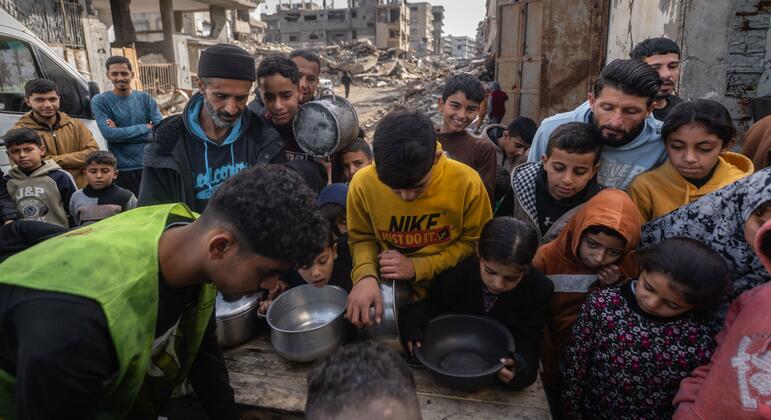
Humanitarian agencies are continuing to deliver food and other essential supplies to hundreds of thousands of people in Gaza as severe food insecurity deepens across the war-ravaged territory.
About one in five families in Gaza report eating only one meal a day, while half say they completely ran out of food at least once during the past month, according to the latest UN figures.
The worsening food crisis is being driven by severe cash shortages as well as soaring prices. Most food items have become dramatically more expensive since the escalation of hostilities in October 2023, making it increasingly difficult for families to meet their basic needs.
The situation is further complicated by limited access to markets. Around three-quarters of households in Gaza have faced difficulties accessing markets this month, according to the UN World Food Programme (WFP).
Humanitarian operations nevertheless continue despite the severe constraints.
On Thursday, the UN and its partners collected hundreds of pallets of humanitarian supplies from the Kerem Shalom crossing, a key commercial and humanitarian entry point to Gaza located near the borders of Israel and Egypt.
The supplies included fresh fruits and vegetables and other food items, along with adult diapers, school supplies and fuel.
As part of its August assistance cycle, humanitarian partners have so far distributed food parcels and wheat flour to more than 600,000 people across Gaza.
However, aid deliveries continue against a backdrop of persistent insecurity and restrictions on movement.
Despite a ceasefire agreement reached between Israel and Hamas in October 2025, ongoing hostilities and security restrictions continue to hamper humanitarian access, civilian movement and recovery efforts.
Israeli military strikes continue to kill and displace people across the territory, while the prolonged conflict has left the vast majority of Gaza’s population dependent on humanitarian assistance.
More than two million people, almost the entire population of Gaza, have been displaced from their homes. Most are now living in makeshift or otherwise fragile shelters, often without adequate access to food, water and other basic services.
The destruction of civilian infrastructure has further compounded the crisis. Around 90 per cent of civilian infrastructure, including homes, hospitals, water facilities and schools, has been heavily damaged or destroyed.
Humanitarian agencies warn that sustained access to food, fuel and other essential supplies remains critical to preventing further deterioration in living conditions and addressing Gaza’s acute humanitarian needs.