Play store

A vast network of nearly 500 caretakers at the shrine of Hazrat Shahjalal (RA) in Sylhet has come under intense scrutiny amid allegations of organized corruption, financial misconduct, and exploitation of devotees.
Recent monitoring by the district administration has uncovered serious irregularities in the shrine’s donation system, prompting a formal investigation.
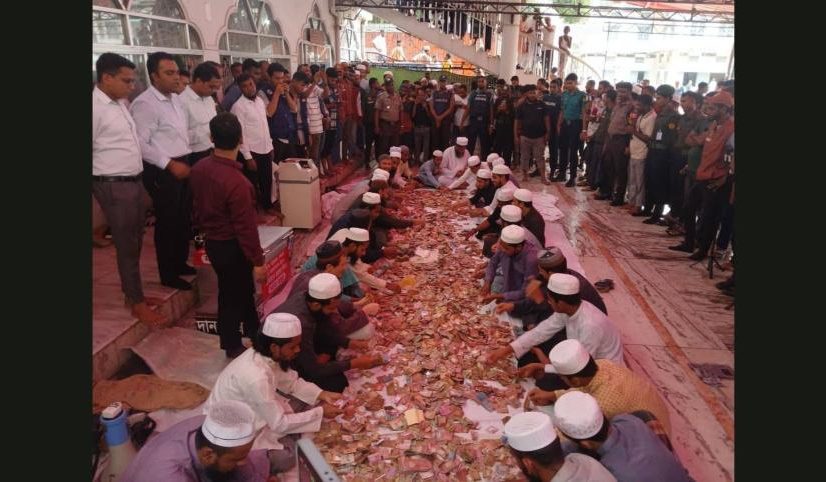
Authorities sealed the donation boxes and, for the first time, opened them under CCTV surveillance.
The move revealed more than Tk 6.4 million in cash collected in just 25 days, along with foreign currencies from 12 countries, gold ornaments, and 65 goats offered as religious vows.
Officials say the absence of institutional oversight over centuries-old donation practices allowed funds to be siphoned off unchecked.
Donations were reportedly collected in sacks and controlled by influential groups linked to the shrine, sparking public outrage.
According to law enforcement officials, there had long been no transparent accounting system, leaving the flow and use of funds largely unknown.
Even after reforms began, allegations persist that significant portions of donations are still being diverted through unofficial channels, including direct hand-to-hand collection from devotees.
Investigations suggest that the shrine’s income extends beyond donation boxes to include personal offerings (nazrana), revenue from shrine-owned businesses and properties, and proceeds from sacrificial animals.
It is alleged that animals donated for religious purposes are resold multiple times, while excessive charges are imposed for their processing and cooking.
The report also points to a structured syndicate within the caretaker community, where a small but powerful group controls daily earnings—sometimes exceeding Tk 1 million on busy days.
Lower-ranking caretakers are allegedly kept financially dependent through high-interest informal loans.
More alarming are accusations of intimidation and extortion. Visitors who protest are reportedly branded as thieves and coerced into paying money under the threat of police involvement.
Additionally, pickpocketing and theft rings are said to operate within the shrine premises under the protection of this network.
Devotional items such as cloth coverings (gilaf) and rose water, brought by worshippers, are also allegedly removed after devotees leave and resold for profit.
Shrine authorities have dismissed some of the allegations, arguing that administrative measures—such as sealing donation boxes—were imposed without proper consultation.
However, the newly appointed district administrator has confirmed that an investigation committee has been formed and is expected to submit its findings within a month.
Meanwhile, the Anti-Corruption Commission says it has gathered preliminary information but is awaiting formal approval to launch a full investigation.
As the probe continues, the revelations have raised serious concerns about governance, accountability, and the safeguarding of public trust at one of Bangladesh’s most revered religious sites.