


 Play store

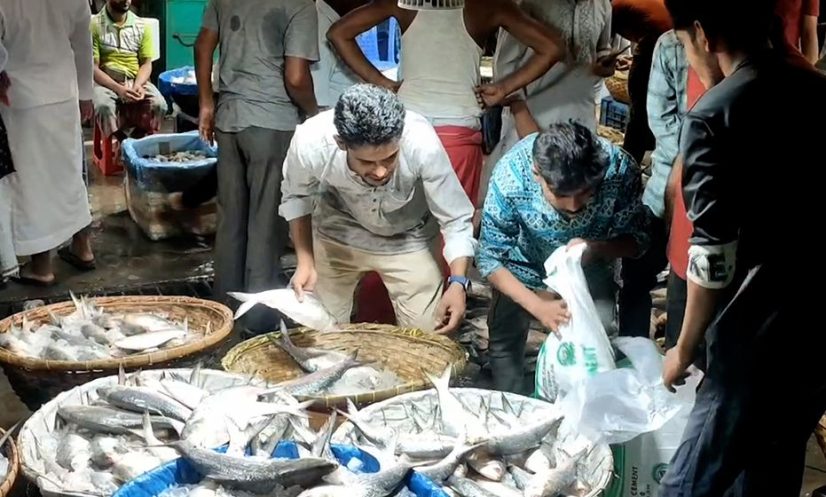
Hilsa supplies have fallen sharply at Chandpur’s renowned Boro Station fish market, one of the country’s largest wholesale hubs for the prized fish, even as the peak fishing season gets underway.
The dwindling supply has pushed hilsa prices beyond the reach of many consumers while also hurting traders, wholesalers and workers at the market.
Although fishermen are increasingly active during the season, many are returning from the rivers after hours of fishing with little or no catch.
Experts have launched a field investigation to determine the reasons behind the decline in hilsa production.
Official statistics show that Bangladesh’s hilsa production has fallen by around 42,000 tonnes over the past two years.
A few years ago, traders at Chandpur’s fish market would handle between 1,000 and 1,500 maunds of hilsa daily during this period.
This year, however, the daily supply has reportedly fallen to less than 100 maunds.
With supplies dwindling, a one-kilogram hilsa is now selling for around Tk 3,000, putting the popular fish beyond the reach of many ordinary consumers.
Fishermen and fisheries experts have attributed the decline to the indiscriminate harvesting of jatka (juvenile hilsa), the widespread use of illegal current nets, navigability problems in rivers and the effects of climate change, all of which are believed to be disrupting the fish’s natural migration.
The shortage has also affected traders and workers who depend on the wholesale market for their livelihoods.
Chandpur District Fisheries Officer Mohammad Fakhrul Islam said authorities were working across the vast riverine areas to protect and develop the country’s hilsa resources despite various challenges.
“Several initiatives have also been taken to improve the situation,” he said.
Dr Md Anisur Rahman, a hilsa researcher and former chief scientific officer at the Bangladesh Fisheries Research Institute, said a five-member expert team had already begun investigating the underlying causes of the crisis.
Nearly half a million fishermen depend on fishing in the Meghna and Padma rivers in Chandpur for their livelihoods, catching hilsa and other species.