Play store

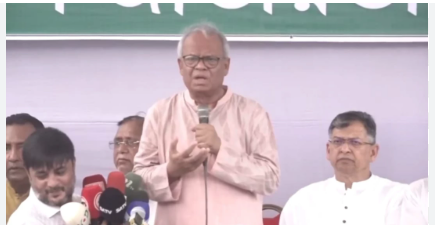
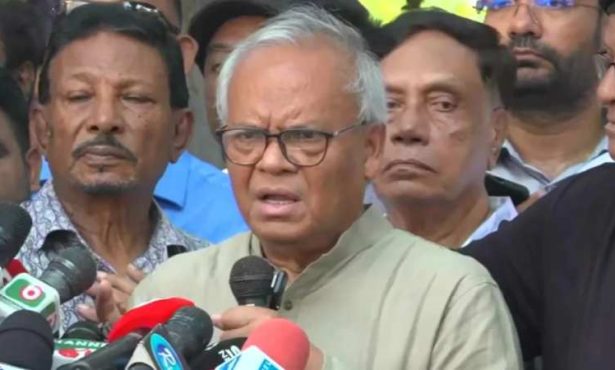
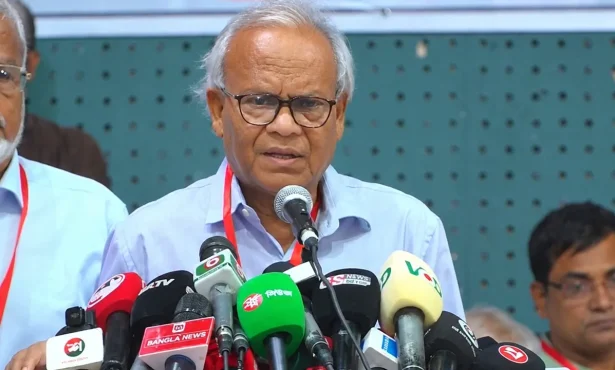
BNP Acting Secretary General Ruhul Kabir Rizvi on Wednesday said the late Begum Khaleda Zia, a three-time former prime minister and chairperson of the BNP, was killed as part of a conspiracy and described her as a martyr.
“Since the Ershad regime and throughout Hasina’s 17 years of unbearable fascist rule, various conspiracies were hatched to remove her from the world. Shaheed President Ziaur Rahman and Begum Khaleda Zia were also killed through conspiracies. She too is a martyr,” he said.
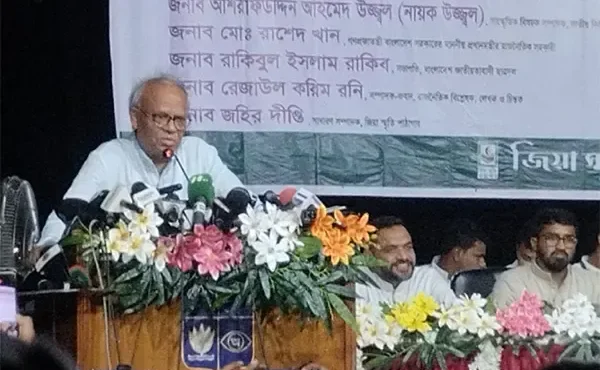
Rizvi made the remarks while briefing journalists after a joint meeting at the BNP central office in Nayapaltan, ahead of the party’s 48th founding anniversary.
He said Ziaur Rahman and Khaleda Zia had relentlessly struggled for the nation and its people, democracy, freedom of expression and the right to speak, adding that repeated attempts had been made to eliminate both leaders.
Recalling the history of the BNP, Rizvi described its founder, Ziaur Rahman, as “a rare man” who inspired a nation in distress by declaring independence for the liberation of the motherland.
He said Ziaur Rahman’s assassination dealt a major blow to democracy. Within a few months, Hussain Muhammad Ershad came to power, and democracy was subsequently “killed,” he added.
Against this backdrop, Rizvi said, Ziaur Rahman’s wife, the “extraordinarily courageous” Khaleda Zia, took charge of the BNP with the aim of restoring democracy.
“She led BNP through movements and struggles. Begum Khaleda Zia turned BNP into pure gold by putting it through fire. She herself was tortured and persecuted, and numerous false cases were filed against her,” Rizvi said.
He said the BNP developed into a broad-based political organisation under the leadership and influence of Ziaur Rahman and Khaleda Zia.
“From one end of the country to the other, BNP has a strong base in different localities. Across Bangladesh, BNP has become a strong organisation,” he said.
According to Rizvi, this was the BNP’s greatest achievement and the reason the party could neither be defeated nor forced to surrender despite what he described as severe repression, torture and fascist oppression.
He said the BNP had consequently emerged as a popular political party and played an “extraordinarily nationalist and patriotic” role in various spheres, including domestic and foreign policy.
“We believe in strengthening our own sovereignty and protecting our own independence. We do not want any other country to be subjugated, and we respect the independence of other countries. Similarly, we want other countries to respect our independence and sovereignty,” Rizvi said.
He said the BNP is now widely respected for upholding this ideology.
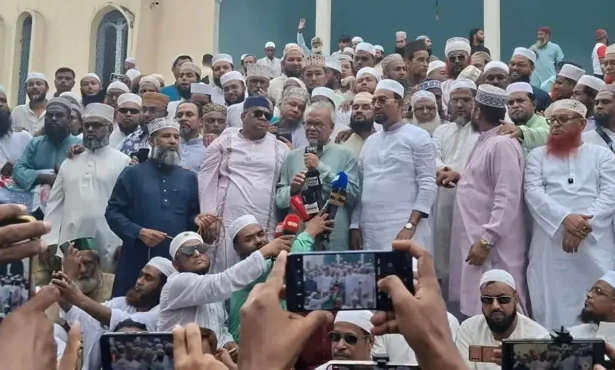
Among those present at the joint meeting were BNP Chairman’s Adviser and Dhaka South City Corporation Administrator Abdus Salam; Joint Secretary Generals Khairul Kabir Khokon, Habib-un-Nabi Khan Sohel and Abdus Salam Azad; Water Resources Minister Mohammad Shahiduddin Chowdhury Anee; and leaders and activists of the BNP and its affiliated and associate organisations.