Play store


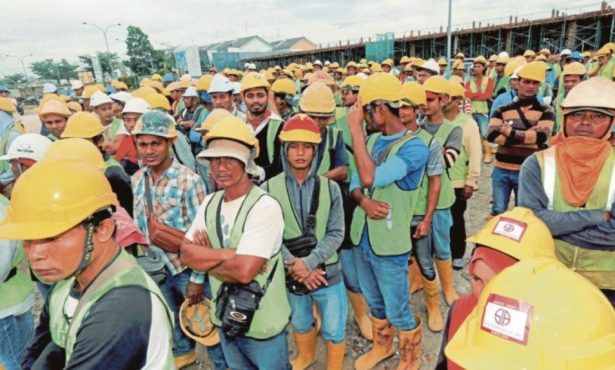
Ahmadul Kobir, Malaysia: The recent meeting between the prime ministers of Bangladesh and Malaysia has once again raised hopes of renewed opportunities for Bangladeshi workers in Malaysia’s labour market.
But even as the two governments prepare to reopen recruitment under a new framework designed to ensure transparency and reduce migration costs, a familiar network appears to be moving quickly into position.
Terms such as “calling visa”, “quota”, “visa ready”, “demand letter” and “jobs with Malaysian companies” are already circulating among prospective workers. On social media and through personal networks, jobseekers are being promised employment in Malaysia, while allegations have emerged that large sums of money are being demanded in advance.
The joint declaration between Bangladesh and Malaysia makes it clear that there should be no room for unauthorised middlemen in the new recruitment process.
Yet questions are already being raised about what is happening on the ground.
An investigation suggests that, despite repeated assurances that lessons have been learned from previous controversies, brokers and intermediaries have not disappeared from the recruitment chain.
The central question is whether Bangladesh’s ambition to ensure “zero migration cost” or migration at minimum expense can survive the realities of a labour recruitment system in which intermediaries have historically played a powerful role.
Who is the employer?
Under Malaysia’s designated recruitment mechanism, Malaysian employers are required to select one of 26 authorised Bangladeshi recruiting agencies. Employers are then expected to recruit workers through the authorised agencies under the agreed procedure.
For prospective workers, therefore, several questions should come before any financial transaction.
Who is the actual employer?
Which sector is offering the job?
What is the salary?
Has the employer received an approved foreign-worker quota?
And which legally authorised Bangladeshi recruiting agency is handling the recruitment?
In reality, however, information about “visas”, “quotas” and “demands” is circulating among jobseekers far more widely than information about the actual employer or the legally approved recruitment process.
This has raised serious concerns about workers who pay money in advance without even knowing whether they have been selected by an employer.
‘Bodies’, ‘heads’ and ‘passports’
In Bangladesh, Malaysian employment visas have long been popularly referred to by intermediaries as “calling visas”.
Alongside that term, an even more disturbing vocabulary has developed within the informal recruitment network.
“How many heads?”
“How many bodies?”
“How many passengers?”
“How many passports?”
Labour migration experts say a worker is not a commodity to be counted as a “body” or a “passport”. Yet, in practice, numbers, passports and money often appear to become more important than the human being at the centre of the recruitment process.
Such language reflects a deeper problem in the labour migration system: the treatment of prospective workers as units to be supplied rather than individuals entitled to transparent information, legal protection and decent employment.
It also risks undermining workers’ rights and damaging Bangladesh’s reputation in international labour markets.
One of the government’s 20 stated priorities for overseas employment is to ensure that workers can migrate either free of cost or at minimum expense. The policy is broadly consistent with the principle of “zero migration cost” now being discussed in connection with Malaysia.
The Ministry of Expatriates’ Welfare and Overseas Employment has already announced an initiative to send 10,000 Bangladeshi workers to Malaysia through the government recruiting agency, Bangladesh Overseas Employment and Services Limited (BOESL), without charging recruitment fees. But an important question remains.
If 10,000 workers can migrate through a government mechanism without paying recruitment fees, will the same principle apply to workers recruited through private agencies?
That could become one of the biggest tests of the new Bangladesh-Malaysia recruitment arrangement.
Malaysia has previously faced criticism, both domestically and internationally, over allegations of excessive recruitment fees, irregularities and the dominance of intermediaries in the recruitment of Bangladeshi workers.
A review of the previous recruitment system shows that controversy surrounded the role of a limited number of agencies involved in processing workers after obtaining demand letters and visas from Malaysian employers.
Following protests, lawsuits and allegations raised at national and international levels, the term “syndicate” became deeply associated with Bangladesh-Malaysia labour migration.
The Bangladesh government subsequently cancelled the licences of 49 recruiting agencies, while several cases related to the issue remain pending before lower and higher courts.
However, allegations persist that the old practice of trading in visas and passports has not disappeared completely.
Although licensed Bangladeshi recruiting agencies may legally receive job demands and powers of attorney from Malaysian employers, intermediaries often remain a major obstacle to direct and transparent recruitment.
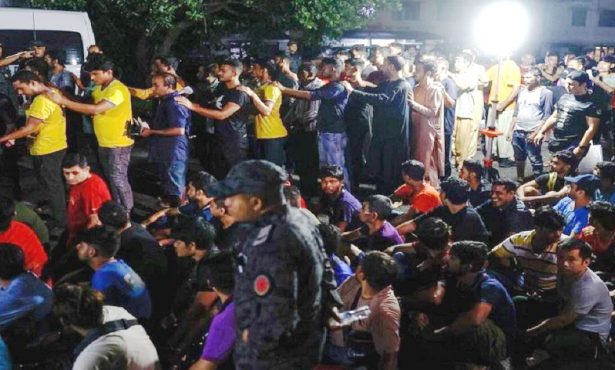
Sources at the Bureau of Manpower, Employment and Training (BMET) say brokers in many cases operate on behalf of licensed recruiting agencies, from sourcing workers in villages to arranging their departure from the airport.
As a result, when Bangladeshi workers living abroad are asked to identify the recruiting agency through which they migrated, many can name only the broker.
During investigations into migration-related complaints, there have even been cases in which workers were unable to identify the recruiting agency responsible for sending them abroad. They could only name the broker who had arranged their journey.
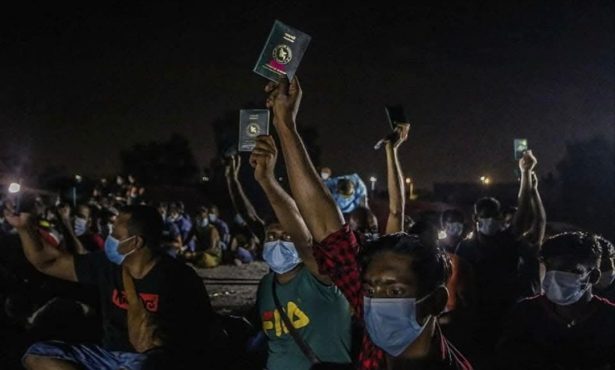
Officials from several established recruiting agencies said many young people in rural Bangladesh hand over their passports to brokers at the very beginning of the migration process.
Negotiations over recruitment fees are also frequently conducted through these intermediaries.
Once a passport is in the possession of a broker, even a legitimate recruiting agency may find it difficult to recruit the worker directly.
The experience of Mohammad Tofayel, a Bangladeshi worker in Kuala Lumpur, reflects the wider reality.
“Many people know very little about the process of migrating abroad. So they depend on brokers to make decisions for them,” he said.
According to him, brokers often take possession of passports and promise to manage the entire process, giving prospective migrants a sense of security.
The workers, however, often end up paying far more. Many prospective migrants also remain unfamiliar with the role of government institutions such as District Employment and Manpower Offices (DEMO), BMET and the Ministry of Expatriates’ Welfare and Overseas Employment.
Some believe they cannot secure jobs by approaching government institutions and that only brokers have the connections needed to arrange employment abroad.
Research by the migration rights organisation OKUP has found that people with relatively low levels of education and inadequate preparation for overseas employment tend to spend more money through brokers and are more vulnerable to fraud.
By contrast, relatively skilled and informed workers are more likely to migrate through legal channels and at lower costs.
Observations by the Refugee and Migratory Movements Research Unit (RMMRU) have similarly found that people with little knowledge of the migration process, and little interest in learning about it, are more dependent on brokers.
Many simply want someone else to “take care of everything”.
As a result, they become among the most vulnerable participants in the migration process while enjoying the weakest protection.
The government has introduced provisions for recognising sub-agents in an effort to bring brokers under a system of accountability.
However, according to industry observers, no recruiting agency has yet formally appointed sub-agents under the proposed system.
At the same time, a mechanism has been introduced allowing licensed recruiting agencies to work with “associate recruiting agencies”.
Under the Malaysia recruitment arrangement, 423 associate recruiting agencies can be linked with the 26 designated Bangladeshi recruiting agencies.
Stakeholders believe that if this system is properly implemented and monitored, it could help reduce the influence of unregulated brokers.
But the success of the arrangement will depend largely on whether the government can ensure that the new structure does not simply create another layer of intermediaries.
Under Malaysia’s published recruitment procedures, an employer must first obtain government approval to recruit foreign workers.
The foreign-worker quota is then determined, after which the employer selects an authorised Bangladeshi recruiting agency.
Prospective workers are subsequently selected and undergo the required medical examinations in Bangladesh. They are expected to remain in the country until they are ready to travel to Malaysia.
Following approval from Malaysian immigration authorities, workers obtain entry visas from the Malaysian High Commission in Bangladesh and complete BMET clearance before departure.
The new system is also intended to prevent artificial selection and the practice of pushing workers onto employers in exchange for money.
Instead, employers are expected to interview prospective workers directly through a technology-based recruitment process before making their final selection.
This raises a fundamental question. If an employer has not interviewed or selected a worker, what is the justification for paying a broker in advance to “guarantee” a visa?
For this reason, the Ministry of Expatriates’ Welfare and Overseas Employment has repeatedly advised prospective workers not to make financial transactions, hand over their passports or undergo unnecessary medical examinations before their employment has been formally confirmed.
If an employer ultimately decides not to recruit a worker, there is still no clear guarantee that money paid in advance to a broker will be returned.
The new recruitment process is an important test for both Bangladesh and Malaysia.
If the controversies of the past, including the dominance of intermediaries, excessive recruitment fees and recruitment irregularities, are allowed to return, the consequences will extend far beyond individual workers.
Bilateral labour-market cooperation could once again come under serious scrutiny.
The immediate priority should be to ensure that every prospective worker receives clear and verifiable information about the actual employer, approved quota, job category, salary, workplace, authorised recruiting agency and total migration cost.
Effective action must also be taken against unauthorised brokers and intermediaries.
Safe overseas employment ultimately depends on two things: a genuine employer and a lawful, transparent recruitment process.
The ministry has advised prospective migrants to contact their nearest District Employment and Manpower Office (DEMO) or Technical Training Centre (TTC) to verify recruitment-related information before making any payment or surrendering their passport.
The promise of sending workers to Malaysia at zero or minimum cost has created fresh hope for thousands of Bangladeshi jobseekers.
But the coming months will show whether that promise can withstand the powerful networks that have long profited from the migration business.
The real test is not how many visas are announced, how many quotas are discussed or how many agencies are involved.
It is whether a prospective worker can know exactly who is hiring him, what job he is being offered, how much he will earn and how much he will have to pay before leaving Bangladesh.
Until those questions are answered transparently, the fear will remain that the old trade in people’s dreams has not disappeared.
It may simply be returning under the familiar name of the “calling visa”.