Play store

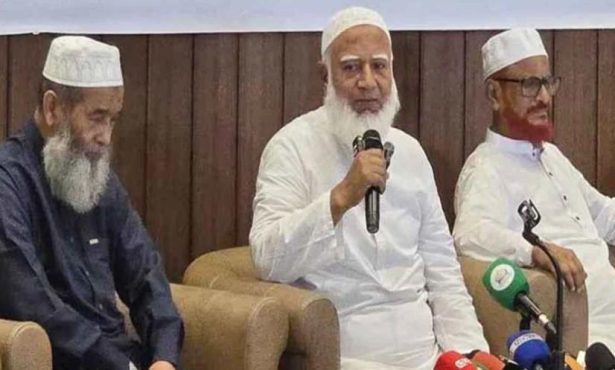
Bangladesh Jamaat-e-Islami Ameer and Leader of the Opposition Dr Shafiqur Rahman has warned that a one-point movement will become inevitable if the government fails to meet the alliance’s seven-point demands.
“If our seven demands are accepted, there will be no need for a one-point demand. But if they are not met, the demand for one point will become inevitable,” he said.
“We will be compelled to launch a one-point movement to protect people’s interests and secure their rights. This country belongs to all of us. Everyone must fight for their rights,” he added.
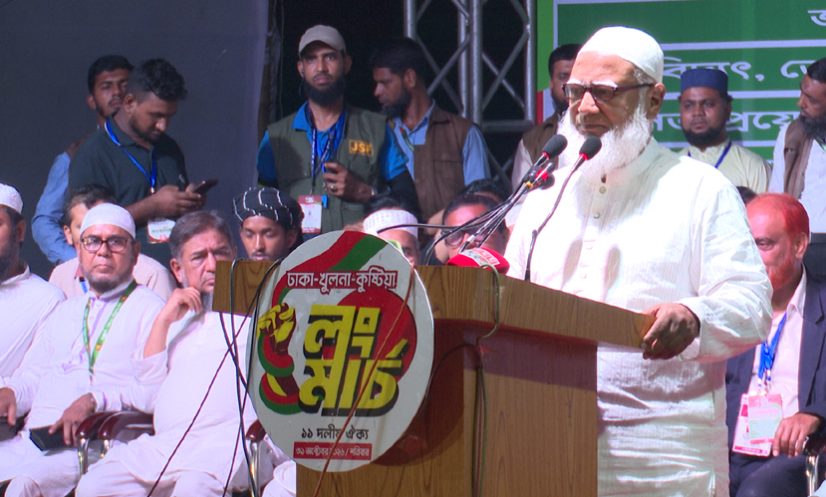
He made the remarks as the chief guest at the concluding rally of a Dhaka-Kushtia long march at Shaheed Abrar Fahad Stadium in Kushtia at around 11:30pm on Saturday.
The long march was organised by the 11-party alliance to press for the implementation of the public mandate in the referendum and other demands.
Addressing the rally, Shafiqur Rahman accused the government of betraying the people, saying the alliance had joined the struggle to defend their rights.
“Seventy per cent of the people wanted a change in Bangladesh. They wanted to bury the dirty practices of politics and build a new Bangladesh,” he said.
Warning the government, he said history had shown that those who disregarded the people’s mandate eventually faced serious consequences.
“Accept our demands peacefully. Not a single one of our demands is a party demand. All of them are aimed at establishing people’s rights,” he said, adding that the demands represented the wider public rather than Jamaat or the 11-party alliance alone.
Recalling the martyrs of the July mass uprising, the Jamaat chief said more than 1,400 people had sacrificed their lives to end authoritarian rule and pave the way for a new Bangladesh.
He said the referendum represented the vision of the martyrs for an equitable, humane and justice-based country, while expressing regret that the government was not honouring their sacrifices.
Vowing to continue the movement, he said they would not bow to injustice, even at the cost of their lives, and would return home only after securing people’s demands.
Bangladesh Khelafat Majlis Ameer Mamunul Haque, addressing the rally, questioned the government’s alleged reluctance to take oath as members of the Constitution Reform Council despite its willingness to take oath as members of parliament.
He alleged that parliamentary office could be used to form a government and create syndicates to plunder public resources.
He further accused vested groups of seeking to monopolise markets for essential commodities, including fuel, gas, electricity and fertiliser, and warned against a return to extortion, mugging, muscle power, robbery, murder and enforced disappearances.
Jamaat Secretary General Mia Mohammad Golam Parwar, Kushtia-2 MP and district Jamaat Naib-e-Ameer Abdul Gafur, Kushtia-3 MP Mufti Amir Hamza, Kushtia-4 MP Afzal Hossain, district Jamaat Ameer Khandaker AKM Ali Mohsin and Secretary Enamul Haque, among others, also spoke at the rally.
The long march began on Saturday morning with an inaugural rally at the southern gate of the Baitul Mukarram National Mosque in Dhaka before heading towards Kushtia.
Along the route, roadside rallies were held at Naodoba in Jajira, Shariatpur; Katakhali intersection in Fakirhat, Bagerhat; Babri Chattar and Swadhinata Chattar at Fultala bus stand in Khulna; Murali intersection in Jashore; and Jhenaidah bus terminal.
Central leaders of the 11-party alliance addressed the roadside gatherings before the procession reached Kushtia.
The alliance previously organised its first long march towards Chattogram on September 5 and a second towards Rangpur on September 19.
Its seven-point demands include implementation of the referendum’s public mandate, trial of the July mass killings, resolution of shortages of electricity, fuel, gas and fertiliser, control of rising prices of essential commodities, improvement of law and order, an end to corruption, extortion and land grabbing, and an end to narrow partisanisation at all levels of the administration.