Play store

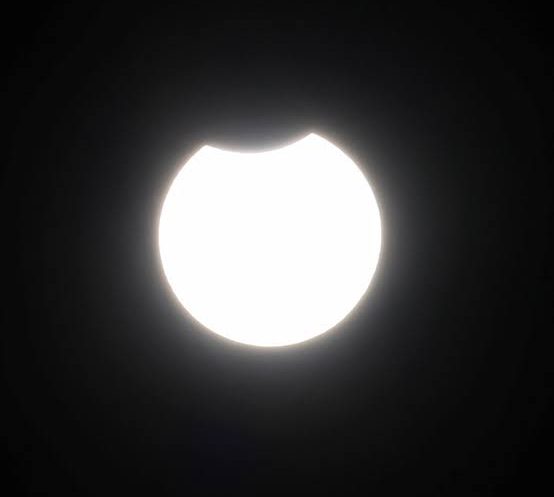
Millions of people across Europe are preparing to witness a rare solar eclipse on Wednesday. While many will want to capture the spectacular event on their smartphones and cameras, experts warn that pointing a camera directly at the Sun without proper protection could permanently damage the device.
According to a report by The Independent, the intense sunlight reaching a smartphone or digital camera during an eclipse can damage its highly sensitive image sensor.
Although the Moon blocks part of the Sun during an eclipse, the remaining direct sunlight can still generate enough heat to damage the camera’s internal components. Holding a camera toward the Sun for an extended period could burn the photodiodes in its image sensor, potentially creating permanent “dead pixels” that cannot be repaired.
Before the 2024 solar eclipse in the United States, NASA warned that smartphone sensors, like other digital image sensors, can be damaged if pointed directly at the Sun.
NASA said the safest way to photograph an eclipse—except during the brief period of totality—is to place a pair of eclipse glasses or another appropriate solar filter in front of the phone’s camera lens.
The agency also warned that wearing eclipse glasses does not make it safe to look directly at the Sun through a camera, telescope, binoculars or another optical device. The concentrated sunlight passing through such equipment can damage the filter and cause serious eye injuries.
However, cameras, binoculars and telescopes equipped with proper solar filters can be used to view a partial or annular eclipse without wearing additional eclipse glasses. The solar filters provide the necessary protection for the eyes.
The only time it is safe to look directly at a total solar eclipse with the naked eye is during the brief period of totality, when the Moon completely covers the Sun.
People in parts of Iceland and Spain located along the path of totality will have the opportunity to view the phenomenon without eye protection for only about one to three minutes.
The eclipse, whose path will begin near the Arctic and move southward, will be the first total solar eclipse visible from Spain in more than 100 years. It will also be the largest partial solar eclipse visible from the United Kingdom this century.